
CIO Growth

July 2025

Remote and Hybrid Work: The Future of Workplaces in 2025

Remote and Hybrid Work The Future of Workplaces in 2025 In 2025, the way we work has fundamentally transformed, with remote and hybrid work models firmly entrenched in the fabric of modern businesses. Initially driven by necessity during the COVID-19 pandemic, these flexible work arrangements have proven to be more than just a temporary solution. Companies across industries now recognize the benefits of offering employees a mix of in-office and remote work, and as a result, hybrid work has become the new normal. Leaders today must navigate this evolving landscape, where employee expectations, technology, and organizational culture are key to thriving in this new era. The Rise of Remote and Hybrid Work: Remote work is no longer considered a perk or a luxury—it’s an expectation. As of 2024, 74% of U.S. companies offer some form of hybrid work, while 61% of employees prefer a hybrid model that allows them to work from home for part of the week​. This shift is largely driven by the widespread adoption of digital tools, increased comfort with remote collaboration, and a growing demand for work-life balance. For companies, the benefits of hybrid work are clear. Employees report higher levels of job satisfaction and productivity, while organizations can reduce overhead costs associated with maintaining large office spaces. This new model also expands the talent pool, allowing businesses to hire the best candidates regardless of geographic location. However, the transition has not been without its challenges. Leaders are now tasked with creating an environment that supports both in-person and remote employees equally. This requires a careful balance between maintaining team cohesion, fostering a strong organizational culture, and ensuring that remote workers have access to the tools and resources they need to succeed. The Key Drivers of Hybrid Work in 2024: Several factors have contributed to the widespread adoption of hybrid work models: Technological Advancements: The acceleration of cloud-based collaboration tools such as Microsoft Teams, Slack, and Zoom has made it easier for teams to communicate and collaborate, regardless of location. Additionally, advancements in AI-powered platforms have improved task automation, virtual assistance, and real-time language translation, allowing global teams to work seamlessly. Employee Demand: The pandemic changed employees’ perspectives on work-life balance. According to a 2023 Gallup survey, 82% of employees say that remote work or a hybrid arrangement increases their overall happiness​. As a result, many companies have embraced hybrid models as a way to attract and retain top talent. Cost Savings for Companies: For many businesses, the cost of maintaining large, centralized office spaces is no longer justifiable. Hybrid work reduces the need for expansive physical offices, which, in turn, allows companies to invest those savings into digital infrastructure, employee benefits, and innovation. For example, Dropbox adopted a “Virtual First” approach, where employees primarily work remotely, while offices are used only for team collaboration and special projects​. Environmental Impact: The shift to remote work has also contributed to a reduction in carbon emissions, as fewer employees are commuting to the office on a daily basis. This supports the sustainability goals of many organizations that are increasingly focused on corporate social responsibility. The Challenges of Remote and Hybrid Work: While the benefits of remote and hybrid work are clear, organizations must also navigate a number of challenges to ensure their success. The key challenges include: Maintaining Company Culture: One of the biggest concerns for companies adopting hybrid models is how to maintain a strong corporate culture. Without the daily face-to-face interactions that occur in an office setting, remote employees can sometimes feel disconnected or isolated. Leaders must prioritize building a culture that is inclusive of remote workers by fostering regular communication, team-building activities, and virtual social events. Ensuring Equal Access to Opportunities: In a hybrid work environment, there is a risk that in-office employees may receive preferential treatment in terms of promotions, feedback, and networking opportunities. Leaders must consciously address this potential bias by implementing policies that ensure equal access to opportunities for both remote and in-office employees. Technology Infrastructure: Not all organizations have the technological infrastructure in place to support a hybrid workforce effectively. Issues such as data security, access to digital tools, and maintaining seamless communication across time zones can pose significant challenges. As hybrid work becomes the norm, companies must invest in secure, reliable technology that enables employees to work efficiently, no matter where they are. Burnout and Overwork: While remote work offers greater flexibility, it can also blur the lines between personal and professional life, leading to overwork and burnout. A survey by Buffer found that 27% of remote workers struggled to unplug from work at the end of the day​. To combat this, companies need to establish clear boundaries, such as encouraging regular breaks and ensuring that employees take time off. Hybrid Work Best Practices for Business Leaders: As companies continue to navigate the shift to hybrid work, leaders must adopt best practices to ensure that both remote and in-office employees thrive. Prioritize Communication: Effective communication is the foundation of successful hybrid work. Leaders should establish regular check-ins, virtual meetings, and collaborative platforms where employees can stay connected. For example, adopting an asynchronous communication style can help bridge time zone differences for global teams, allowing workers to contribute at their own pace without the pressure of constant real-time interaction. Invest in Employee Well-being: Employee well-being is more important than ever in a hybrid environment. Companies should offer mental health support, encourage work-life balance, and provide resources for managing stress. Initiatives such as flexible work hours and unlimited paid time off (PTO) can help employees feel more in control of their schedules and reduce burnout. Create Equal Access to Growth Opportunities: Leaders must be proactive in ensuring that all employees, whether remote or in-office, have access to the same growth opportunities. This includes offering virtual training programs, mentoring, and professional development sessions. By leveling the playing field, companies can ensure that remote workers don’t miss out on career advancement simply because they are not physically present in the office. Use Data

Remote and Hybrid Work: The Future of Workplaces in 2025 Read More »

Data Monetization: Unlocking New Revenue Streams in 2025

Data Monetization Unlocking New Revenue Streams in 2025 In today’s hyper-connected world, data has become one of the most valuable assets for businesses, often referred to as “the new oil.” The vast amounts of data generated every second are providing organizations with unparalleled insights into consumer behavior, operational efficiencies, and emerging market trends. In 2024, data monetization is no longer just a strategy for tech giants; it is a viable revenue stream for companies of all sizes and industries. Businesses are increasingly exploring how to turn their internal and customer data into economic value. However, with great opportunity comes the responsibility to navigate ethical concerns, regulatory requirements, and technological challenges. What is Data Monetization? Data monetization refers to the process of leveraging data assets to generate value. This can take many forms, such as selling data directly, creating data-driven products, or using data to enhance existing services. It’s not just about selling data to third parties; it also encompasses improving internal efficiencies and optimizing decision-making by harnessing data insights. Data monetization falls into two main categories: Direct Monetization: This involves selling raw or processed data to external parties. Businesses collect data from various sources (e.g., customer interactions, transactions, and IoT devices) and either sell this data directly or through intermediaries like data brokers. Indirect Monetization: Instead of selling the data itself, businesses use it to improve their operations, reduce costs, enhance customer experiences, or create new products and services. For instance, by analyzing customer behavior, companies can deliver more personalized marketing campaigns or optimize their supply chains. The Rise of Data-Driven Business Models: Companies that once focused primarily on products or services are now shifting toward data-driven business models. Consider the transformation in industries like healthcare, retail, and manufacturing. Healthcare organizations, for instance, are leveraging patient data to improve outcomes and develop new treatments. Retailers are using data to deliver personalized shopping experiences and predict demand. Manufacturers are optimizing production by analyzing machine-generated data in real time. For example, Tesla uses the vast amounts of data collected from its cars to improve vehicle performance, predict potential maintenance needs, and even train its autonomous driving algorithms. The company’s data strategy doesn’t just enhance the customer experience—it also opens up new avenues for recurring revenue by selling data-driven services like self-driving capabilities. The financial services sector is another area where data monetization is taking off. Banks and fintech companies are developing products that provide insights based on transaction data. For instance, personalized budgeting tools that track spending patterns allow customers to better manage their finances, while also giving companies deeper insight into consumer behavior, which can be monetized in various ways. Enabling Technologies for Data Monetization: Several technologies are making data monetization more accessible and effective for businesses in 2024: AI and Machine Learning (ML): AI enables businesses to analyze vast amounts of data quickly, identifying patterns and trends that humans would struggle to uncover. ML models can predict customer behavior, optimize processes, and generate insights that can be directly monetized. For example, AI algorithms can identify churn risks in a customer base, allowing businesses to take proactive measures to retain valuable clients. Cloud Computing: Cloud platforms have made data storage and processing more scalable and cost-effective. Companies no longer need massive in-house infrastructure to analyze large datasets. Platforms like Google Cloud and AWS offer data analytics tools that allow businesses to process and monetize data more efficiently. Blockchain: As data becomes more valuable, concerns over privacy and data security have grown. Blockchain technology offers a solution by enabling more secure and transparent data transactions. It can create immutable, auditable records of data exchanges, helping companies build trust with customers and partners when selling or sharing data. Overcoming the Challenges: Privacy and Regulatory Concerns: While the potential of data monetization is significant, businesses must navigate a complex landscape of privacy regulations and ethical considerations. One of the primary concerns is consumer privacy. The General Data Protection Regulation (GDPR) in Europe and the California Consumer Privacy Act (CCPA) in the U.S. have set strict guidelines on how companies can collect, store, and use consumer data. Fines for non-compliance can be steep—up to 4% of global revenue in the case of GDPR violations. As consumers become more aware of how their data is being used, businesses must prioritize transparency and consent. Companies must ensure that they have clear policies in place for obtaining user consent and allow users to opt out of data collection when necessary. Moreover, businesses need to implement robust data security measures to prevent breaches that could damage their reputation and lead to financial penalties. Ethical data usage is also a growing concern. Just because a company can monetize data doesn’t always mean it should. For example, using personal data in ways that consumers find intrusive or manipulative can backfire, leading to customer distrust and potential backlash. The importance of ethical AI and data governance frameworks cannot be overstated in this context. Creating Value Through Indirect Data Monetization: For many businesses, the most significant opportunity for data monetization lies not in selling data but in using it to create new, value-added services. Consider the example of John Deere, the agricultural equipment manufacturer. By analyzing data collected from sensors on its machinery, the company offers farmers insights into crop performance, soil conditions, and optimal planting strategies. This not only improves the customer experience but also generates a new revenue stream through subscription-based analytics services. Similarly, Uber uses data from its ridesharing platform to optimize driver routes, reduce waiting times, and even predict where demand will increase. This data-driven approach has allowed Uber to improve its service while also monetizing its insights in various ways, such as through partnerships with cities and urban planners. Another emerging trend in 2024 is data sharing ecosystems, where businesses collaborate to share data for mutual benefit. For instance, companies in the automotive industry might pool data to improve safety features or enable autonomous driving. In such cases, the value of the data grows exponentially as more

Data Monetization: Unlocking New Revenue Streams in 2025 Read More »

Cybersecurity: A Business Imperative in the Digital Age

Cybersecurity A Business Imperative in the Digital Age As the corporate world becomes more digital, cybersecurity has risen to the forefront of business strategy. In 2024, the scope and sophistication of cyber threats are unprecedented, forcing companies to take a proactive and comprehensive approach to securing their data and networks. With the global costs of cybercrime projected to exceed $10 trillion annually by 2025, businesses can no longer afford to view cybersecurity as an IT issue—it is a critical organizational priority. For leaders, staying ahead of cyber threats requires not only the right technologies but also a well-rounded strategy that encompasses policy, training, and response mechanisms. The Escalating Threat Landscape: In 2024, cyber-attacks are more diverse and damaging than ever. From ransomware attacks that cripple entire industries to phishing scams that prey on individuals, no business is immune to the risks. According to a 2023 report by IBM, the average cost of a data breach reached an all-time high of $4.45 million, an increase driven by sophisticated tactics like AI-powered attacks. One notable shift is the use of automated cyberattacks, in which hackers leverage AI to conduct attacks at scale. These systems can identify vulnerabilities, deploy malware, and even respond to defensive measures in real time. This AI-driven evolution in cybercrime has forced businesses to rethink their defense strategies, emphasizing the importance of AI and machine learning (ML) in identifying potential threats. Proactive Cybersecurity: Moving Beyond Reactive Measures: Historically, cybersecurity strategies were reactive—companies focused on fixing vulnerabilities after they had been exploited. However, this approach is no longer viable in an era where the cost and frequency of attacks are growing rapidly. Modern cybersecurity demands a proactive strategy that incorporates real-time monitoring, predictive analytics, and threat intelligence. AI and ML have become crucial tools in this fight. Platforms like Microsoft’s Azure Sentinel and IBM’s QRadar offer AI-driven threat detection and response, allowing businesses to identify potential attacks before they fully materialize. These systems monitor vast amounts of network traffic, flagging anomalous behavior, and enabling rapid intervention. For example, AI algorithms can recognize unusual login attempts or strange data flows, isolating the issue for further inspection. A proactive approach also includes zero-trust architecture, a security framework that assumes no user or device, even within the organization, can be trusted. By requiring continuous verification, businesses can prevent unauthorized access even from within the network, minimizing the risk of internal threats. Cybersecurity Culture and the Human Element: While technology is a critical component of cybersecurity, human error remains the leading cause of data breaches. According to a 2022 report by Verizon, more than 80% of breaches involve human factors, such as weak passwords, poor phishing detection, or accidental data exposure. Therefore, creating a cybersecurity-aware culture is as important as deploying cutting-edge security tools. Continuous employee training is key. Regular phishing simulations, password management workshops, and training on safe data practices should be part of every company’s cybersecurity plan. Leaders must ensure that every employee, from interns to the C-suite, understands the company’s cybersecurity protocols and their personal responsibilities in safeguarding data. Moreover, cybersecurity must be embedded in everyday decision-making. For instance, developers should prioritize security at every stage of software development, a principle known as DevSecOps. Similarly, HR departments should be involved in educating new hires on security protocols from day one. Cybersecurity is not the sole responsibility of the IT department; it’s an organizational issue that requires everyone’s attention. Cyber Resilience: Planning for the Inevitable: Even the most sophisticated cybersecurity systems cannot guarantee 100% protection. Therefore, businesses must also focus on cyber resilience—the ability to respond to and recover from a cyber incident with minimal disruption. A comprehensive incident response plan (IRP) is essential. This plan should detail the steps that teams need to take following a security breach, including who is responsible for communication, what actions need to be taken to isolate the threat, and how the company will restore services. Having a well-rehearsed IRP can reduce the financial and reputational damage caused by a breach. In addition to IRPs, disaster recovery plans should be regularly updated and tested. Cloud-based backup solutions are increasingly popular, allowing businesses to maintain access to critical data even in the event of a ransomware attack. Companies like Google Cloud and AWS offer solutions that can restore operations within hours, ensuring minimal downtime. Communication also plays a crucial role in maintaining resilience. In the event of a breach, companies must be transparent with both employees and customers, ensuring that affected parties are informed and that regulatory requirements, such as GDPR or the California Consumer Privacy Act (CCPA), are met. The Role of Regulation in Cybersecurity: The regulatory environment for cybersecurity is rapidly evolving. Governments around the world are introducing stricter data protection laws, requiring businesses to take greater responsibility for safeguarding customer data. In the U.S., laws like the Cyber Incident Reporting for Critical Infrastructure Act (CIRCIA) mandate that businesses in key sectors report cyber incidents within 72 hours. In Europe, GDPR continues to set a high standard for data protection, with penalties for non-compliance reaching up to 4% of global revenue. Other regions, including Asia-Pacific, are following suit with their own data privacy regulations. For global businesses, staying compliant with these regulations can be a significant challenge, but failure to do so can result in hefty fines and reputational damage. The Future of Cybersecurity: AI and Quantum Computing: Looking ahead, AI will continue to play a major role in both cyberattacks and defenses. As businesses integrate AI into their operations, the battle between hackers and security teams will intensify, with both sides using increasingly sophisticated tools. One emerging threat is quantum computing, which has the potential to render current encryption methods obsolete. While still in its infancy, quantum computers could theoretically break widely used encryption algorithms, exposing vast amounts of sensitive data. In response, organizations are investing in quantum-resistant encryption techniques, preparing for a future where quantum attacks become a reality. Additionally, blockchain technology is being explored as a way to create tamper-proof records,

Cybersecurity: A Business Imperative in the Digital Age Read More »

first post

AI and Automation: Redefining Business Strategy in 2025

AI and Automation Redefining Business Strategy in 2024 Artificial intelligence (AI) and automation are fundamentally reshaping the corporate landscape in 2024. No longer just buzzwords, these technologies are becoming integral components of business strategies across industries. AI, especially generative AI, is driving operational efficiency, fostering creativity, and enabling personalized customer experiences on a scale previously unimaginable. For business leaders, understanding how to integrate AI and automation into their strategies is crucial for remaining competitive in today’s rapidly evolving market. AI as a Creativity Booster: Traditionally, automation was thought to eliminate routine, repetitive tasks. However, modern AI tools are now capable of supporting and enhancing human creativity. Generative AI models, like GPT, are being used to create initial drafts of content, be it marketing copy, design ideas, or even product innovations. In the creative industries, this is particularly transformative, as AI can generate hundreds of variations on a theme, which human designers or writers can then refine. AI enables brainstorming at a massive scale and allows teams to explore ideas faster than ever before. For instance, AI-powered tools like Copy.ai or Jasper allow marketing teams to quickly draft engaging content by generating language that is on-brand and tailored to specific audience segments. Creative professionals in industries ranging from advertising to fashion are leveraging AI to generate and refine new concepts, streamlining their workflows and enhancing productivity. Enhancing Personalization and Customer Experience: In the realm of customer experience, personalization is the name of the game in 2024. AI and machine learning algorithms analyze vast amounts of data to identify patterns in consumer behavior, preferences, and purchasing habits. This allows businesses to deliver hyper-personalized experiences to their customers, which, in turn, leads to increased engagement and loyalty. Retailers, for example, use AI to recommend products based on past purchases, browsing history, and even social media interactions. Streaming services like Netflix and Spotify use AI to tailor recommendations to users, keeping them engaged and returning for more personalized content. This level of customization would be impossible without AI, which can process and analyze data far more quickly than any human team could. Optimizing Operations and Efficiency: Beyond creative tasks and customer engagement, AI and automation are making an impact on operational efficiency. AI-powered automation is streamlining supply chains, optimizing logistics, and improving customer service through AI-driven chatbots and virtual assistants. In manufacturing, AI is being used to predict equipment failures before they happen, thanks to predictive maintenance algorithms that monitor machinery in real time. This reduces downtime, improves efficiency, and saves businesses substantial costs. For example, in retail logistics, companies like Amazon use AI to optimize their supply chain management, ensuring that products move from warehouse to customer with minimal delays. AI tools can predict demand surges, optimize inventory levels, and manage shipping routes in real time, significantly improving efficiency. AI and the Workforce: Upskilling for the Future: One of the key challenges facing businesses in 2024 is how to balance the use of AI with human oversight. While AI is incredibly powerful, it is not infallible. Human judgment, creativity, and critical thinking are still necessary to interpret AI-driven insights and ensure they align with broader business goals. As a result, businesses need to invest in upskilling their workforce to work effectively with AI tools. This trend is driving significant changes in corporate training and development programs. Companies are increasingly focused on reskilling their employees to work alongside AI, emphasizing the importance of analytical thinking, creativity, and problem-solving. The World Economic Forum predicts that by 2025, over 85 million jobs may be displaced by AI and automation, but at the same time, 97 million new roles could be created that are more adapted to the new division of labor between humans and machines. This means companies that invest in their people, giving them the skills needed to work in AI-augmented environments, will have a distinct advantage. Ethical Considerations and AI Governance: Despite AI’s potential, business leaders must carefully consider the ethical implications of implementing AI technologies. AI systems are only as good as the data they are trained on, and biased data can lead to biased outcomes. In HR, for example, AI tools designed to assist in recruitment processes have faced scrutiny for unintentionally perpetuating biases against certain demographic groups. Businesses must take proactive steps to ensure their AI systems are transparent, accountable, and designed with fairness in mind. Data privacy is another critical concern. With AI systems collecting and analyzing vast amounts of data, companies must ensure they comply with regulations such as GDPR and the California Consumer Privacy Act (CCPA). This includes being transparent with customers about how their data is being used and giving them control over their personal information. The Road Ahead for AI and Automation: As we move further into 2024, AI and automation will continue to evolve and become even more embedded in business operations. We can expect to see advancements in AI’s ability to understand and generate natural language, further blurring the lines between human and machine-driven tasks. Automation will become more intelligent and flexible, enabling businesses to optimize not just repetitive tasks but also more complex decision-making processes. Looking ahead, companies that thrive will be those that not only adopt AI but also integrate it into a broader strategy that combines human ingenuity with machine intelligence. Leaders must focus on fostering a culture of continuous learning, encouraging creativity, and building trust in AI systems through ethical governance. By doing so, they can leverage AI to drive innovation, increase efficiency, and stay ahead in an increasingly competitive landscape. In conclusion, AI and automation are no longer just tools for improving efficiency—they are fundamental to modern business strategy. From enhancing creativity and personalization to optimizing operations and empowering employees, these technologies are transforming industries. However, their true power lies in their ability to complement human intelligence, enabling businesses to solve complex problems, innovate, and stay competitive in 2024 and beyond.

AI and Automation: Redefining Business Strategy in 2025 Read More »

Daniel Kwame

Daniel Kwame

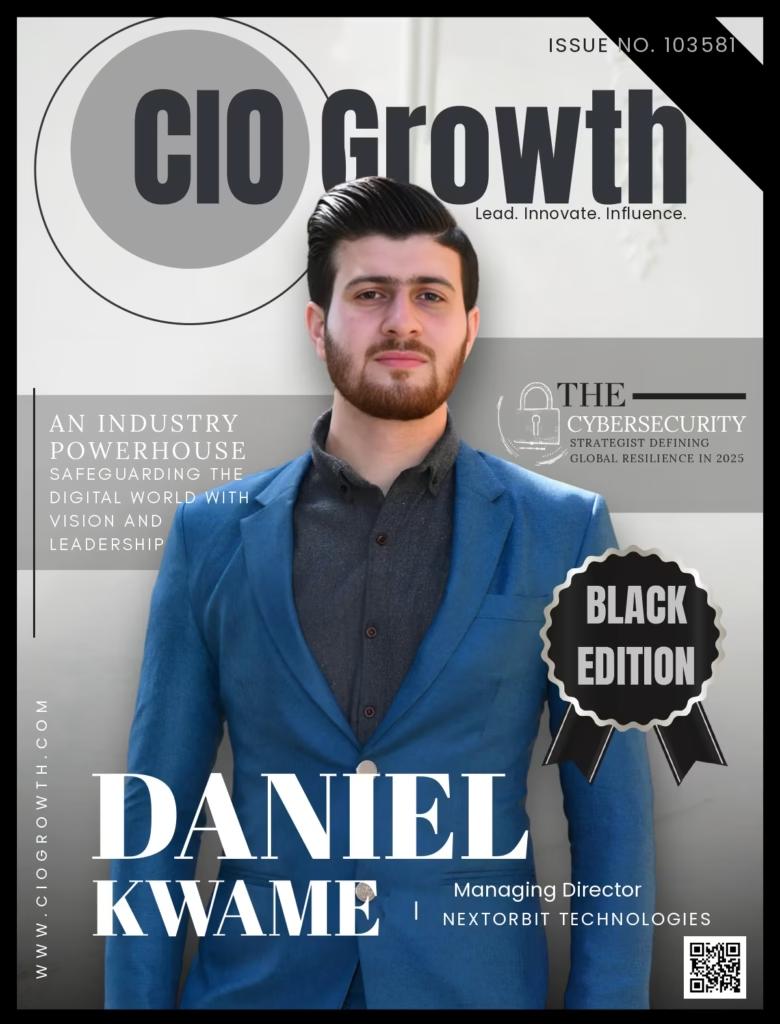
Daniel Kwame Managing Director NextOrbit Technologies The Cybersecurity Strategist defining global resilience in 2025 Property management is an essential aspect of real estate, requiring a multifaceted approach to ensure the smooth operation and profitability of properties, whether residential or commercial. It encompasses the management of properties on behalf of their owners, taking on responsibilities such as rent collection, tenant communication, coordinating maintenance, and generating financial reports. Essentially, property managers serve as intermediaries between the property owner and the tenants, ensuring that properties are maintained, fully occupied, and lucrative a seasoned expert in the real estate industry with over 25 years of experience, stands at the forefront of property management. As the owner of Hi Pacific PM, a renowned property management company, he has firmly established himself as a leader known for his dedication to providing high-quality service and his unwavering commitment to his team. Under ’s leadership, Hi Pacific PM has consistently earned accolades, including being recognized as one of the top three property management firms for the past ten years—a testament to the company’s success and growth over the years. The Symbiotic Relationship Between Property Management and Real Estate Sales In real estate, property management and sales are often interwoven, with many realtors starting in sales before dipping their toes into property management. Typically, real estate agents focus on selling properties, only venturing into property management as an additional service to supplement their primary work. However,  made a strategic and deliberate decision 15 years ago to pursue property management exclusively, diverging from the standard practice. By focusing solely on property management,  distanced himself from the typical realtor who divides attention between sales and management. His unique approach has positioned him as a specialist in his field, catering to clients who seek dedicated professionals rather than those who split their focus believes that property management is not a part-time responsibility or side project. He emphasizes that once a landlord starts renting out a property, they are bound to encounter a multitude of inquiries—from questions about rent payment systems to urgent maintenance issues. For , managing these challenges is a testament to why property management demands total commitment and focus. By dedicating himself entirely to this sector, he has been able to streamline his processes and offer a higher level of service than many competitors who juggle both sales and property management. The decision to focus solely on property management has paid off.  has built a strong reputation for being efficient and reliable, traits that have earned him the trust of both property owners and real estate agents. Realtors who need reliable property management services for their clients frequently turn to  for his expertise. This exclusivity has allowed him to create a niche for himself in the competitive real estate market, proving that specialization in one area can lead to exceptional success.   Streamlining Property Management: ’s Journey Recognizing the enormous daily demands of maintaining the properties he managed,  quickly realized the need for a more structured approach to maintenance. Within the first year of founding Hi Pacific PM,  established a dedicated maintenance department. The department was created to handle maintenance requests around the clock, seven days a week, ensuring that any property-related issues could be resolved swiftly and efficiently. As ’s portfolio of properties grew beyond 100, the need for a maintenance team became even more urgent. Tenants frequently contacted him with issues ranging from leaks to broken doors and other household problems. The constant barrage of calls began to consume ’s time as a property manager, underscoring the necessity of having a dedicated team to handle these inquiries. In response,  assigned a team to handle the influx of maintenance requests, which now average around 80 to 100 calls per week. These requests vary from routine maintenance to more complex repairs, but by having a dedicated maintenance department,  has been able to optimize his operations. The result has been a noticeable improvement in service quality, benefiting both property owners and tenants. The delegation of tasks has freed  from being consumed by maintenance issues, allowing him to focus on other crucial aspects of property management. Embracing Technological Advancements in Property Management   Over the years,  has witnessed the remarkable technological advancements that have transformed the property management industry. Innovations like automated rent collection and streamlined owner payment systems have revolutionized how property management companies operate.  recalls the days when property managers had to make frequent trips to the bank to deposit checks. Now, thanks to evolving banking procedures, those trips have become a thing of the past. The introduction of check-scanning technology has simplified financial operations, making it possible for property managers to deposit checks remotely and almost entirely eliminate cash transactions. One of the most notable technological advancements  has embraced is the use of DocuSign for contracts. This technology allows property owners and tenants to sign documents digitally, significantly speeding up the paperwork process and reducing reliance on traditional paper contracts. In addition to DocuSign,  has incorporated scanning capabilities into the company’s operations, enabling seamless sharing of documents, photos, and videos. These digital tools allow  and his team to keep detailed records of property conditions, maintenance issues, and other pertinent information. The digital images are stored on modern computers with enhanced storage capacity, ensuring easy access to records. Automated date stamping further enhances the accuracy and accountability of record-keeping, leaving little room for error. These technological innovations have not only increased efficiency but also improved the overall experience for clients and tenants.  is committed to staying ahead of the curve by continuing to adopt new technologies that simplify property management processes and improve the service experience.   A Fresh Approach to Property Management: ’s Perspective One key element that sets  apart from his competitors is his client-first philosophy. While many property management companies require owners to provide an upfront payment similar to a security deposit to cover potential damages,  took a different path. He questioned this common practice and found it unjustifiable. Many property managers rely on both the

Daniel Kwame Read More »

Laura Sanchez

Laura Sanchez

Laura Sanchez VP of Innovation CoreEdge Systems she’s the system core edge vp on leadership and legacy In the heart of New York City, where the pace of life never slows and diversity defines the rhythm of its streets,  has carved a legacy as a visionary leader who bridges the gap between human potential and organizational excellence. As Chief People Officer (CPO) at Services for the Underserved (S:US), a nonprofit dedicated to uplifting vulnerable communities, Cole’s career is a testament to the transformative power of empathetic leadership, strategic innovation, and an unyielding commitment to equity. Her journey – from economics student to global HR disruptor – reveals how redefining leadership begins with listening, adapting, and daring to put people first. Her own background – a Fordham degree in economics and psychology and a global executive MBA (NYU Stern, LSE, HEC Paris) – provides the analytical foundation for this vision. Drawing on that education and decades of experience, Cole is implementing data-driven HR programs to empower staff and advance the agency’s mission of supporting vulnerable New Yorkers. The Alchemist of Human Potential ’s story begins with a fusion of two disciplines: economics and psychology. A graduate of Fordham University, she harnessed the analytical rigor of economics and the nuanced understanding of human behavior from psychology to forge a career uniquely positioned at the intersection of business strategy and people-centric innovation. This duality became her superpower. “Organizations are successful when their people are successful” she reflects, a mantra that has guided her through roles at industry giants like Accenture, Porter Novelli, and PwC, and now at S:US, where her work impacts thousands of employees and clients alike. Her TRIUM Global Executive MBA – a joint program from NYU Stern, London School of Economics, and HEC Paris – further equipped her with a global lens, enabling her to navigate cross-cultural complexities and drive workforce transformation across borders. Whether building HR consulting practices from scratch or leading cost-reduction initiatives for Fortune 500 companies, Cole’s approach has always been rooted in a simple truth: people are not resources to manage, but partners to empower. From Consultant to Chief Cole’s path to nonprofit leadership runs through the world of corporate and consulting HR. Early in her career she held senior human-capital roles at PwC and Towers Watson and served as North America Career Management Practice Leader at Right Management. She then joined Accenture as a Managing Director (“Human Resource Disruptor”), where she led large transformation projects, and later became Chief People & Transformation Officer at Porter Novelli, leading that global firm’s talent acquisition and people development. Along the way she founded her own consulting firm ( Associates) to advise clients on HR strategy, and recently co‑founded Cascade Clarity AI, blending her people expertise with emerging technology The Architect of Inclusive Cultures Building S: US’s HR Foundation When Cole joined S:US as interim CPO in 2023, she encountered an organization brimming with passion but strained by rapid growth. Employees – many of whom had lived experiences mirroring the clients they served – were burning out under administrative burdens. “We had heroes doing lifesaving work, but our HR processes and systems weren’t designed to support them” she says. Her first act? Listening. Over three months, Cole visited programs, met with the different program leaders, and held one-on-ones with staff. “I heard stories of talent shortages, long preboarding processes, and employee burnout.. These weren’t just employees – they are advocates who care deeply about the work they are doing .” Armed with these insights, she spearheaded a three-pillar transformation: Simplifying Processes: Replacing outdated paper-based systems with cloud HR tools, cutting onboarding time by 50%. Prioritizing Wellness: Championing trauma-informed training and providing mental health resources to address secondary trauma among staff. Amplifying Voices: Encouraging employee-led committees that shape policies and processes. “HR isn’t a department; it’s a partnership” Cole emphasizes. “When we equip people with the right tools and trust, they move mountains.” Data as a Force for Good Cole introduced predictive analytics to S: US’s talent strategy. By analyzing patterns in turnover, engagement surveys, and exit interviews, her team identified a critical insight: Employees in roles with high client interaction thrived when given coaching and support. The result? The introduction of new manager training and development programs that are not one and done but designed to create internal mobility and professional development. Servant Leadership in Action Cole’s leadership style defies traditional hierarchies. A self-described “servant leader” she prioritizes presence, empathy, and collective growth over command-and-control tactics. “Early in my career, I thought leadership meant having all the answers. Now I know it’s about asking the right questions and listening” she shares. This philosophy has fostered psychological safety at S:US, where employees are encouraged to voice ideas and challenge norms. Her approach to balancing work and life further underscores her authenticity. Rejecting the myth of the “50/50 split” Cole advocates for fluidity: “There are seasons for family and seasons for work. What matters is having a support system – and grace for yourself.” With her children now grown, she channels her energy into mentoring rising HR leaders, many of whom now helm their own teams, a point of pride she calls “the ripple effect of lifting others.” By modeling the balance, she encourages her team to bring their whole selves to work, believing that a happy staff fuels a thriving organization. In her philosophy, leadership means progress and humility. She warns teams not to “let perfection get in the way of progress” and to be ready to “try, fail fast, and redirect”. Cole reminds colleagues that everyone makes mistakes: “Don’t be afraid to make mistakes…treat mistakes as a learning opportunity” she advises. Early in her career she ran teams with a “command and control” style, but she gradually learned that true strength comes from listening. “Over time I discovered that listening was key” Cole reflects. Today she combines strategic rigor with compassion – as she puts it, “having data-driven, empathetic decisions is the signature of a world-class HR professional”. Under her

Laura Sanchez Read More »

Raj Mehta

Raj Mehta

Raj Mehta CEO Infralytics Global From insight to the impact ceo driving global intelligence Raj Mehta: The Strategic Leader Redefining Excellence in Investment & Advisory When ambition meets perseverance, remarkable success stories unfold. Raj Mehta Worthington, Managing Partner at Infralytics Global, exemplifies this journey. From humble beginnings in an unfinished basement in Markham, Ontario, to leading one of Canada’s top hotel renovation firms with operations spanning across Canada, the U.S., and Dubai, his story is one of resilience, integrity, and visionary leadership. The Genesis of Fifteen years ago,  started as a supplier of high-end bathroom fixtures. The company soon expanded into home renovations, taking on small projects before gradually tackling larger ones. A turning point came when Shane partnered with Mahmood Kara, a long-time friend and now co-owner of . Their shared vision and values laid the groundwork for a thriving business. Recognizing an opportunity in the hospitality sector, they built a reliable team to take on full-scale hotel renovations. Their first major project – a demanding hotel renovation in downtown Toronto – tested their resilience but set the foundation for what would become an industry-leading company. Since then,  has successfully completed over 75 branded hotel renovations across Canada and the U.S., working with premier hospitality brands such as Marriott, Hilton, Sheraton, Westin, W Hotels, Pan Pacific, and Radisson. Today, the company is known for its expertise, ethical business practices, and unwavering commitment to excellence. The Core Philosophy: Integrity, Trust, and Purpose At the heart of ’s success lies a strong foundation of trust and integrity. Shane and Mahmood see their partnership as more than just business – it’s a shared journey built on mutual respect and commitment to a higher purpose. “Our focus has never been on luxury or excess; it has always been about securing our families and using our success to uplift others” says Shane. “We believe in doing business the right way, ensuring that every dollar earned is used responsibly.” This guiding principle has shaped their approach to leadership, operations, and community impact, reinforcing their commitment to making a meaningful difference beyond financial success. Key Milestones and Expansion ’s trajectory is marked by significant milestones: National Expansion: Establishing a strong presence across Canada, with projects from British Columbia to Nova Scotia. Breaking into the U.S. Market: Setting up operations and successfully completing large-scale hotel renovations in major cities. Dubai Expansion: Launching a fully operational branch in Dubai with a dedicated team specializing in high-end residential and commercial projects. Technological Innovation: Developing XANA CONNEX, a proprietary mobile application designed to enhance project management efficiency, with pilot testing currently underway in Canada and Dubai. Sustainability Initiatives: Introducing eco-friendly practices in renovations, including energy-efficient lighting, sustainable materials, and water conservation systems. As the company expands, their ability to execute large-scale renovations across multiple countries with precision and professionalism has set them apart in the industry. Each milestone represents not just growth, but a commitment to their core values of quality, integrity, and client satisfaction. Traits Behind Success: Leadership, Integrity, and Resilience Shane attributes ’s achievements to three core traits: Leadership: Shane and Mahmood are deeply involved in all aspects of the business, from financials to operations and business development. Their hands-on approach has fuelled growth through networking and reputation rather than traditional sales methods. Integrity: Transparency and strong ethical values define their business model, fostering trust among clients and employees. Resilience: The journey has been anything but easy. Financial struggles, tough projects, and unforeseen challenges have tested their resolve, but their faith, hard work, and perseverance have been the driving forces behind their success. Their ability to withstand economic downturns, navigate industry shifts, and overcome operational hurdles is a testament to their determination and strategic thinking. Standout Offerings and Industry Impact ’s reputation is built on four key differentiators: Hands-on Involvement: Every project receives meticulous attention, regardless of size. Clear Communication: Regular updates and transparent reporting build long-term client relationships. Innovation: The XANA CONNEX app is transforming project management efficiency. Passion for Excellence: Beyond business, Shane and his team are genuinely committed to delivering top-tier quality in every project.  has cultivated a reputation for excellence in the hospitality sector, working on projects that transform spaces and enhance the guest experience. Their ability to balance aesthetics, functionality, and durability ensures that every renovation aligns with the brand identity and high standards of their prestigious clients. Major Ongoing Projects  is currently engaged in several high-profile projects: Canada: A full-scale renovation of the Hilton Resort & Spa in Whistler, a boutique hotel transformation in downtown Toronto, and large hotel renovations in Mississauga, Hamilton, and Halifax. U.S.: Expanding its hospitality renovation portfolio, targeting large-scale projects for premier brands. Dubai: Guest room upgrades for the prestigious St. Regis Hotel and multiple luxury residential projects focused on high-end finishes and bespoke designs. Sustainable Construction: Implementing green building practices in select projects to meet the growing demand for environmentally responsible renovations. These projects showcase ’s ability to adapt and execute on diverse projects, whether it’s restoring historic properties or creating cutting-edge modern hospitality spaces. Vision for the Future Looking ahead, Shane envisions  expanding its footprint significantly over the next five years. Plans include: Establishing regional offices across Canada to strengthen national presence. Expanding U.S. operations, with a focus on New York and other major markets. Entering new international markets, particularly in Saudi Arabia, South Asia, and Europe. Leveraging AI-driven project management systems to enhance efficiency and scalability. Doubling or tripling in size to solidify its standing as a global leader in hotel, residential, and commercial renovations.  is continuously exploring ways to innovate in the construction and renovation sector. The integration of smart technologies and sustainable building practices is at the forefront of their growth strategy, ensuring that future projects meet evolving environmental and efficiency standards. Overcoming Challenges Success doesn’t come without its hurdles. In its early days,  faced financial constraints, making it difficult to attract top talent. Shane and Mahmood often had to sacrifice personal time to fill in the gaps. The COVID-19 pandemic presented

Raj Mehta Read More »

Natalie Pierce

Natalie Pierce

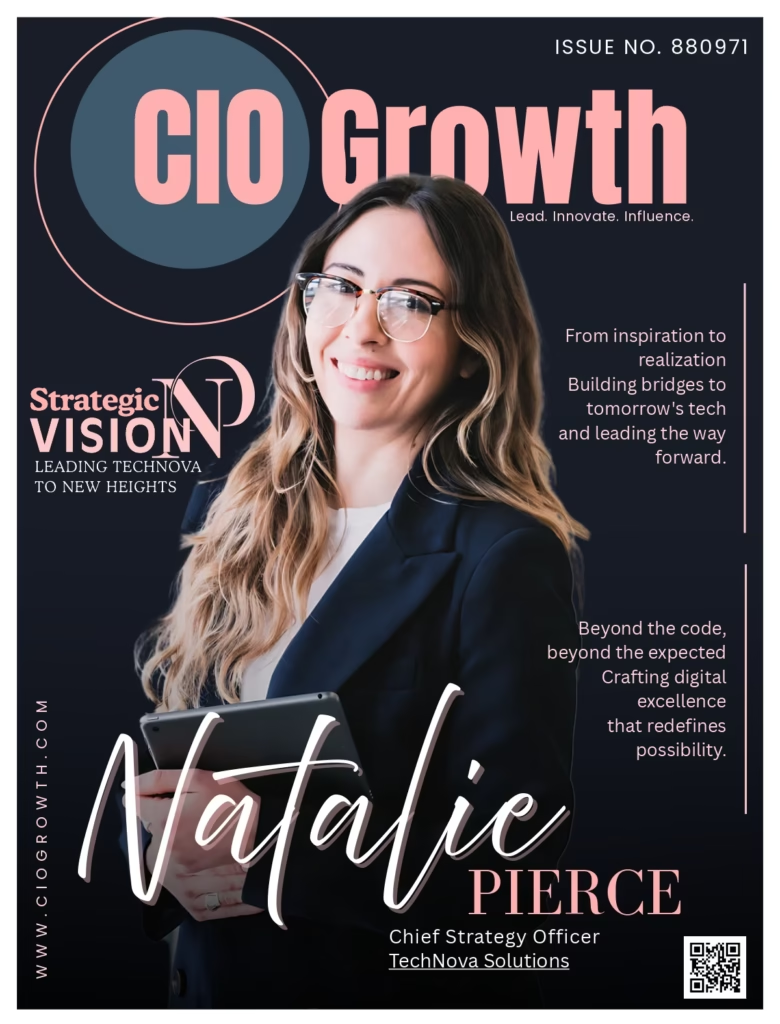
Natalie Pierce Chief Strategy Officer TechNova Solutions Strateegic Vision Leading technova to new heights As a leader, I believe in empowering my team to think creatively and embrace innovation in everything we do. The finance and technology sector is a fast-paced and ever-changing industry, where the merging of finance and technology drives efficiency, innovation, and global growth. From digital banking solutions to algorithmic trading platforms, this industry plays a crucial role in transforming the global economy and revolutionizing traditional financial practices. Professionals in this field are leading the charge in technological advancements, challenging conventional business models, and driving significant change. One such trailblazer is , a well-respected figure in this space. As Senior Vice President of Finance Solutions and Technology at a major global company, Natalie Pierce has become known for her leadership, strategic insight, and innovative approach. With a solid foundation in finance and a passion for leveraging technology to fuel business success, Natalie Pierce leads her team in creating cutting-edge solutions that streamline financial operations, boost efficiency, and support strategic growth. She is widely recognized for her strategic vision and commitment to delivering results, consistently driving positive change within her organization. Natalie Pierce: Leading Finance and Technology at Johnson & Johnson Currently serving as the Senior Vice President of Finance Solutions and Technology at Johnson & Johnson, Natalie Pierce’s passion for finance was ignited in high school, where she became captivated by both finance and accounting systems. She pursued her interest in college by majoring in accounting while taking IT courses to broaden her skill set. Beginning her career as a Financial Accountant, Natalie Pierce has since held a variety of roles involving financial reporting, analytics, acquisitions, divestitures, forecasting, planning, tax, and transformational activities. As a divisional CFO, she has led large-scale ERP system transformations and played a key role in implementing emerging technologies, including machine learning, blockchain, robotics, and Artificial Intelligence. Early on, Natalie Pierce benefited from mentorship and sponsorship from senior leaders, who provided her with the training and opportunities necessary for professional growth. Throughout her career, Natalie Pierce has gained experience with various financial systems, starting with Oracle ERP and later transitioning to SAP. She realized that the underlying principles of ERP systems are adaptable across platforms such as Oracle, SAP, and JDE. Rather than getting caught up in technical specifics, she focused on mastering fundamental concepts that could be applied to a wide range of professional settings. Her ability to adapt and continuously learn has been central to her success in navigating the complex world of finance and technology, allowing her to lead transformative initiatives in an evolving industry. From Humble Beginnings to Leadership at Johnson & Johnson Natalie Pierce’s upbringing in a modest environment, with supportive parents who instilled values of hard work, integrity, and perseverance, has been a cornerstone of her leadership approach. These values have guided her career, now as a Senior Vice President at Johnson & Johnson, where she is drawn to companies that prioritize patient care and have a clear mission to make a positive impact. Natalie Pierce respects leaders who embody Johnson & Johnson’s credo through their actions, aligning their teams with the company’s vision. As a leader, Natalie Pierce values individuals who are passionate about their work and open to embracing change. She admires those who tackle complex challenges head-on and question established norms. Inspired by visionary leadership, Natalie Pierce believes in cultivating talent, planning for the future while focusing on the present, and maximizing the potential of her team. Her journey from humble beginnings to a leadership role at one of the world’s most respected companies demonstrates the power of determination, hard work, and the desire to make a difference. Empowering the Next Generation: Natalie Pierce’s Legac Natalie Pierce’s inspiration comes from her mother, a woman who taught her the values of honesty, integrity, and dedication. These lessons have shaped Natalie Pierce’s approach to her career and her passion for mentorship. She is committed to sharing her journey with the next generation, hoping to inspire others to pursue their dreams and goals. Her commitment to mentorship reflects her belief that by helping others, we can create a better future. By sharing her experiences, Natalie Pierce hopes to empower young professionals to overcome challenges and achieve success. She encourages others to believe in themselves and work towards their goals with dedication and purpose. Diversity, Equity, and Mentorship: Natalie Pierce’s Perspective Natalie Pierce understands that the professional landscape can be especially challenging for women, particularly women of color. She believes that diversity, equity, and inclusion are essential to personal and professional growth. Having colleagues and mentors from diverse backgrounds and skill sets enriches the workplace and contributes to overall success. Despite being the only woman of color in many professional settings, Natalie Pierce never doubted her abilities or her place at the table. Through hard work and perseverance, she consistently delivered high-quality results, earning the respect of her peers. While progress has been made toward greater gender and racial equity in the workplace, Natalie Pierce hopes to see accelerated change in the coming years. As a mentor, Natalie Pierce is dedicated to supporting young women as they enter the workforce, offering guidance and a support system to help them navigate challenges. She also acts as a trusted peer to more experienced professionals, sharing her insights and expertise to help them grow in their careers. Natalie Pierce’s commitment to diversity and equity underscores her desire to create inclusive work environments where everyone has the opportunity to succeed. She believes that by advocating for equal opportunities, we can create a more just and equitable world. Envisioning, Strategizing, and Leading: Natalie Pierce’s Strengths One of Natalie Pierce’s greatest strengths as a leader is her ability to envision the future, create strategic plans, and execute them effectively. With a strong understanding of both finance and technology, she seamlessly integrates the two fields, balancing attention to detail with a big-picture perspective. This skill allows her to see beyond immediate concerns and position

Natalie Pierce Read More »