CIO Growth

shubhamrockmail@gmail.com

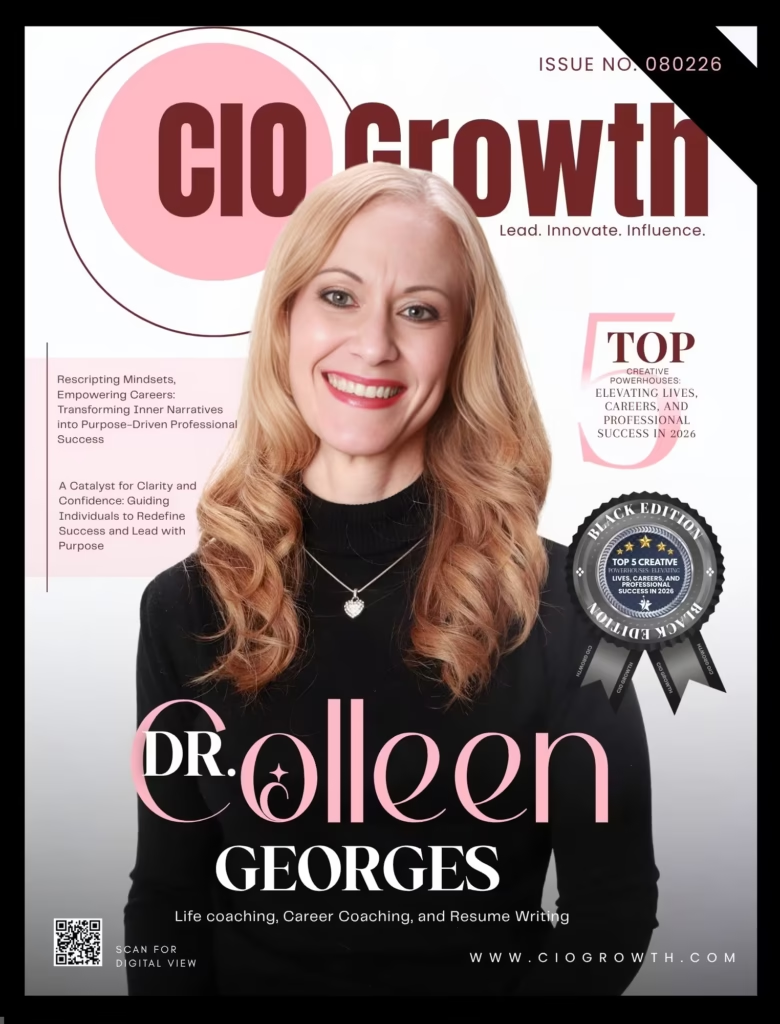
Dr. Colleen Georges

Dr. Colleen Georges

Dr. Colleen Georges Life coaching, Career Coaching, and Resume Writing Top 5 Creative Powerhouses: Elevating Lives, Careers, and Professional Success in 2026 In a professional world marked by rapid change, uncertainty, and constant reinvention, few leaders stand out for their ability to combine deep psychological insight with practical, real-world impact. Dr. Colleen Georges is one such powerhouse – an educator, counselor, TEDx speaker, author, and entrepreneur who has dedicated her career to helping individuals rewrite the narratives that shape their lives and careers. Her influence sits at the intersection of mindset, meaning, and momentum – where internal belief systems meet external action. At a time when professionals are questioning not just what they do, but why they do it, her work provides both clarity and courage. A Journey Rooted in Purpose and People Dr. Georges’ calling emerged early. At just 14, she knew her future would involve working closely with people. This clarity led her to pursue a doctorate in counseling psychology, initially with the intention of becoming a family therapist. However, a pivotal internship at Rutgers University Career Services in 1997 altered her professional trajectory in a profound way. What began as skepticism toward career counseling quickly transformed into a passion. She discovered deep fulfillment in helping students clarify their goals, articulate their strengths through resumes, navigate job searches, prepare for interviews, and ultimately align their careers with their values and passions. This realization launched a 13-year career in higher education leadership, culminating in her role as a department director, followed by more than 16 years teaching women’s leadership and counseling courses at Rutgers. These years were formative – not only in refining her expertise, but in shaping her philosophy. She witnessed firsthand how intelligence and talent alone were rarely the barriers holding people back. Instead, it was fear, self-doubt, and unexamined internal narratives that limited growth. Building a Business Around Transformation In 2008, Dr. Georges began writing resumes on the side, responding to a growing demand for personalized, thoughtful career guidance. When her son was born in 2009, her priorities sharpened further. By 2010, she made a decisive leap – leaving her director role to run her business, RESCRIPT Your Story LLC, full-time. Over the past 16 years, her firm has evolved into a trusted partner for individuals and organizations seeking meaningful growth. Through career and life coaching, resume writing, and organizational speaking and training, she has helped professionals at every stage – from early-career individuals to seasoned leaders – navigate change with confidence and intention. What distinguishes her approach is its depth. Rather than offering surface-level fixes, she works at the root – helping clients understand why they feel stuck before determining how to move forward. A Defining Milestone: Taking the TEDx Stage While earning a doctorate and building a thriving business are remarkable achievements, Dr. Georges identifies one moment as a true turning point: her 2016 TEDx Talk, “Rescripting the Stories We Tell Ourselves.” On that stage, she articulated the core framework behind her work – that the internal stories we repeat ultimately become the lives we live. By openly sharing her own experiences with anxiety and self-doubt in her twenties, she demonstrated how gratitude and intentional self-talk can reshape mindset and outcomes. The impact was immediate and lasting. The talk resonated deeply with audiences across professions and generations, leading to her book, RESCRIPT the Story You’re Telling Yourself. More importantly, it gave language to an experience many people felt but could not yet name – the quiet power of self-narrative. Yet, for Dr. Georges, success is not measured by visibility alone. The true milestones are found in client outcomes: professionals leaving toxic environments, negotiating raises they once believed were out of reach, launching purpose-driven businesses, and reclaiming confidence during moments of transition. Redefining Career Success in a Changing World As technology and AI rapidly reshape the coaching and professional development landscape, Dr. Georges sees both promise and caution. Digital tools have expanded access and efficiency, but they cannot address the emotional and psychological complexity of modern work on their own. Today’s professionals are navigating layoffs, burnout, identity shifts, and blurred boundaries between work and life. In this environment, she believes career coaching must move beyond tactics and titles. It must become holistic, psychology-informed, and human-centered. With her background as a Licensed Professional Counselor, combined with advanced training in career and life coaching, Dr. Georges brings a rare integration of science and strategy. She helps clients build resilience, manage imposter syndrome, strengthen confidence, and make decisions aligned with both ambition and well-being. Technology, in her view, is a powerful supplement – but mindset remains the foundation. Advice for Leaders and Aspiring Change-Makers Dr. Georges’ guidance to emerging leaders is refreshingly direct: Don’t wait – initiate. Too many capable professionals delay action while waiting for certainty, permission, or perfect readiness. Her message reframes confidence as a byproduct of movement, not a prerequisite. Small, intentional, courageous steps create momentum – and momentum builds belief. Equally important is her redefinition of impact. Impact, she explains, is not always loud or public. Sometimes it is mentoring one person, setting a boundary that protects your values, or choosing integrity over applause. Leadership is not performance – it is alignment. A Lasting Influence for 2026 and Beyond As one of the Top 5 Creative Powerhouses shaping professional success in 2026, Dr. Colleen Georges represents a new model of leadership – one that values self-awareness as much as strategy, and courage as much as credentials. Her work reminds us that careers are not merely built through external achievements, but through the internal stories that guide our choices. By helping individuals rescript those stories, she continues to elevate lives, careers, and confidence – proving that sustainable success begins within and expands outward, one intentional step at a time.

Dr. Colleen Georges Read More »

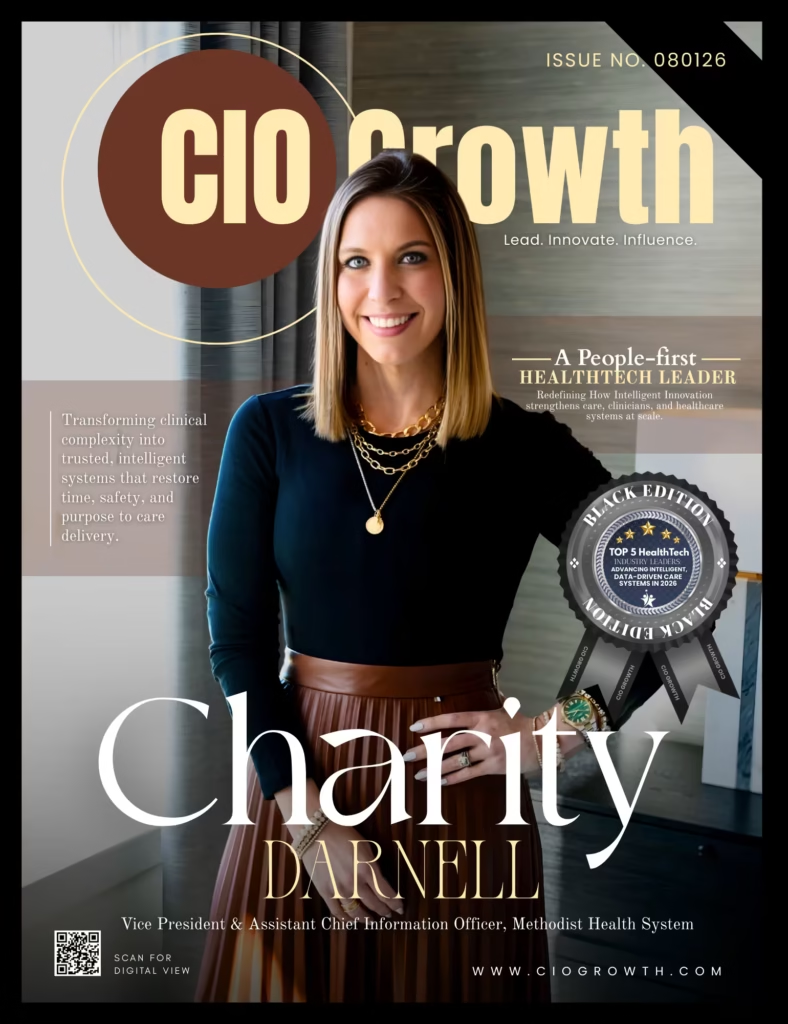
Charity Darnell

Charity Darnell

Charity Darnell Vice President & Assistant Chief Information Officer Methodist Health System Top 5 HealthTech Industry Leaders: Advancing Intelligent, Data-Driven Care Systems in 2026 In an era where healthcare transformation is defined by intelligence, interoperability, and human-centered design, Charity Darnell stands as a powerful example of what values-driven leadership can achieve. With a career that began at the bedside and evolved into enterprise-level digital leadership, Charity represents a new generation of HealthTech executives: clinicians first, technologists second, and people always at the center. Her work sits at the intersection of clinical care, informatics, and organizational transformation, where technology is not treated as the solution itself, but as an enabler of safer systems, stronger teams, and better patient outcomes. Across more than a decade of leadership in complex healthcare environments, Charity has consistently proven that the most impactful innovation is rooted in empathy, trust, and operational reality. From Bedside Care to Enterprise Transformation Charity’s professional journey began as a pediatric nurse, an experience that continues to define her leadership philosophy. Caring for children and families during their most vulnerable moments taught her that excellence in healthcare is never limited to clinical expertise alone; it is shaped by communication, teamwork, reliability, and compassion. Those early lessons became the foundation of a career built on service, accountability, and human-centered leadership. As her career evolved, Charity transitioned into clinical informatics and healthcare technology leadership, driven by a desire to solve the systemic challenges clinicians face every day. She saw firsthand how fragmented workflows, inefficient systems, and poorly designed digital tools could add burden rather than value. Instead of viewing technology as an end goal, she approached it as a means to remove friction, restore time to care teams, and strengthen safety and outcomes. Over 14 years at Cook Children’s Health Care System, Charity grew into senior leadership roles, ultimately serving as Vice President & Chief Clinical Information Officer. In this role, she helped guide enterprise digital strategy, clinical transformation, and informatics governance at scale. Most recently, she stepped into a new chapter as Vice President & Assistant Chief Information Officer at Methodist Health System, where she continues to drive innovation with a focus on resilience, workforce sustainability, and operational excellence. Across every role, her purpose has remained constant: people first – patients, clinicians, and teams. Her career reflects a rare blend of clinical credibility, technical fluency, and transformational leadership. Building Systems That Serve the Frontline When asked about her most significant professional milestone, Charity does not point to a single project or title. Instead, she speaks to impact – sustained, human-centered impact that improves daily work for clinicians and care teams while advancing safety and quality for patients. One of her most defining accomplishments has been leading large-scale digital transformation initiatives that meaningfully improved clinical workflows, strengthened governance, and reduced operational burden across complex healthcare systems. From enterprise EHR optimization to informatics redesign, her work focused not simply on deploying technology, but on aligning clinical leaders, IT teams, and operational stakeholders around shared outcomes. For Charity, informatics serves as the bridge between care and capability – translating clinical complexity into workflows that technology can support, and translating technical possibility into tools that actually work for frontline teams. This dual fluency has enabled her to deliver systems that are not only functional, but trusted and adopted. Equally important has been her commitment to culture and people development. She has built high-performing teams rooted in psychological safety, shared accountability, and professional growth. Seeing analysts evolve into confident change leaders, clinicians feel supported by digital tools, and teams thrive within resilient structures stands among her most meaningful achievements. Stepping into her current role at Methodist Health System represents both a milestone and a platform – an opportunity to extend her impact, scale innovation, and continue serving at enterprise level. For Charity, success is ultimately measured not by systems deployed, but by environments created: spaces where people feel valued, empowered, and equipped to deliver the best possible care. Leading the Shift from Digital Adoption to Digital Maturity Charity believes healthcare is entering a defining moment. Workforce strain, financial pressure, rising consumer expectations, and accelerating technological capability are converging at unprecedented speed. In this environment, transformation will not be driven by technology alone – but technology will serve as a powerful catalyst. She sees the future of healthcare shifting decisively from digital adoption to digital maturity. Organizations will move beyond simply deploying tools toward measuring outcomes that truly matter: reduced clinician burden, improved safety, operational resilience, and workforce sustainability. AI-enabled workflows, ambient documentation, predictive analytics, and intelligent capacity management will become foundational – but only if implemented responsibly, ethically, and with deep clinical partnership. For Charity, success in this next era requires strong governance, cyber resilience, interoperability, and workflow redesign – not as optional enhancements, but as operational imperatives. Technology leaders must increasingly serve as translators between what is technically possible and what is clinically practical, ensuring innovation enhances care rather than disrupting it. Her personal mission – and the mission of the organizations she serves – is to keep people at the center of innovation. This means designing systems that feel intuitive, reliable, and supportive to frontline teams. It means listening deeply to clinicians, measuring what truly improves practice, and being willing to change direction when solutions fail to serve real-world needs. She is particularly passionate about virtual nursing, ambient enablement, and automation of administrative workload – not to replace clinicians, but to restore time, energy, and joy in practice. In her vision, the future belongs to healthcare organizations that build trust, reduce friction, and prove that technology can strengthen, not strain, the human experience of care. Leadership Rooted in Service, Trust, and Purpose For aspiring leaders seeking to create meaningful impact, Charity’s message is both clear and deeply grounded: lead with people first – always. She believes strategy, execution, and results matter, but leadership is ultimately defined by stewardship – the responsibility to build environments where people care for people during life’s most difficult moments. The

Charity Darnell Read More »

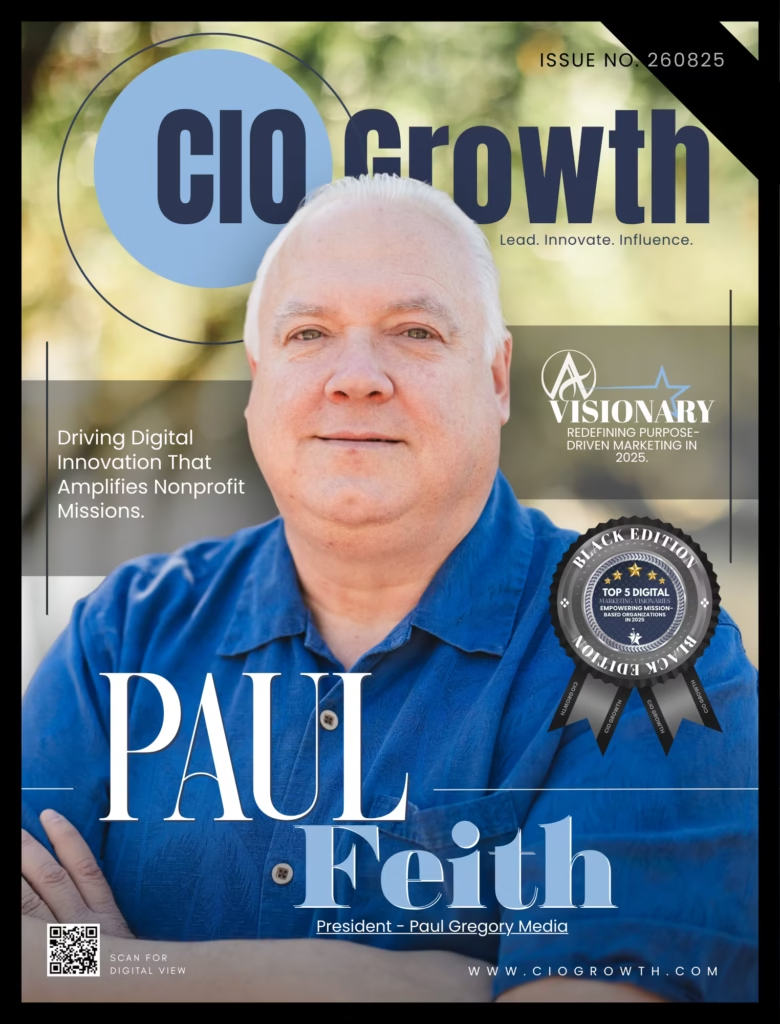
Paul Feith

Paul Feith

Paul Feith President Paul Gregory Media Top 5 Digital Marketing Visionaries Empowering Mission-Based Organizations in 2025 In today’s digital age, where a compelling online presence can make or break the success of mission-based organizations, visionary leaders in digital marketing are more critical than ever. Among those shaping the future is Paul Feith, an innovator, strategist, and empathetic leader whose agency, Paul Gregory Media (PGM), has become synonymous with empowering nonprofits to magnify their impact through digital excellence. This article dives deep into Paul Feith’s inspiring journey, the philosophy that drives his company, and his groundbreaking work in 2025, spotlighting why he is a leading figure among the top digital marketing visionaries for mission-driven organizations. Early Passion for Technology and Creativity Paul Feith’s story begins in the late 1990s, a period marked by the rise of the internet and digital media. In 1998, Paul started his professional career in the new media department at Playboy Enterprises, where he immersed himself in the burgeoning world of graphic design, website development, and content delivery systems. These formative years exposed him to the intersection of creativity and technology, fuelling a passion that would steer much of his later work. At a time when the digital landscape was still in its infancy, Paul embraced learning every facet of the field – from database programming to digital marketing strategies – and remained agile amid the rapidly evolving tech scene. This skill set positioned him uniquely as an early adopter of tools and trends that would become crucial pillars in digital marketing today. Entrepreneurial Beginnings and the Birth of Paul Gregory Media In 2006, armed with experience and a vision, Paul founded Paul Gregory Media in Naperville, Illinois. The company’s name pays homage to his first and middle name, Paul Gregory, symbolizing a personal stamp on the business’s ethos. Initially a one-man endeavour focused on graphic design, PGM concentrated on building a solid reputation for creativity and client commitment. During these early years, the 2007 economic recession posed significant hurdles for the company. Budgets tightened across industries, especially in marketing, and competition intensified. Rather than scaling down, Paul saw an opportunity to engage more deeply with his community. He focused on pro bono work and partnerships with local nonprofits, providing them affordable, quality marketing solutions to help them grow. This community-first approach sowed seeds for PGM’s later specialization and its embedded social mission. A Strategic Shift Toward Mission-Based Organizations By 2011, Paul’s increasing involvement with nonprofit boards such as Giving DuPage immersed him in the unique challenges mission-driven organizations face. He realized nonprofits often lacked the digital know-how and resources essential for effective fundraising, advocacy, and volunteer engagement in a digital-first world. Recognizing this gap, Paul transitioned PGM from a general marketing company to a niche full-service digital agency focused primarily on serving nonprofit clients. PGM expanded its offerings to include comprehensive digital strategies that leveraged branding, website development, content marketing, social media, paid media, user experience, and video production tailored to the distinct needs of organizations with a cause. This strategic pivot not only differentiated PGM but also aligned the agency’s business objectives with Paul’s passion for social impact. The Certified B-Corporation Commitment A landmark moment for Paul Gregory Media came in 2020, when the agency earned Certified B-Corporation status. This certification is awarded to companies meeting rigorous standards of social and environmental performance, accountability, and transparency. It solidified PGM’s position not just as a marketing agency but as a socially responsible enterprise committed to purpose alongside profit. The B-Corp certification aligns with PGM’s core values centered on business ethics, community involvement, and sustainability. It frames the company’s strategic decision-making processes and daily operations, ensuring that social impact and client success are deeply integrated with employee welfare and environmental consciousness. Cultivating an Inclusive and Supportive Culture Beyond client work, Paul Feith’s leadership philosophy is evident in the culture he cultivates internally. PGM operates as a 100% remote agency, embracing flexibility and work-life balance with a 32-hour four-day workweek and an unlimited paid time off policy. This progressive approach attracts top digital marketing talent who prioritize meaningful work alongside personal wellbeing – key to retaining a workforce driven by empathy and dedication to mission-driven causes. Paul personally recruits marketers and creatives with nonprofit experience or a gifting mindset to foster a team that truly understands the client’s perspective. The company’s leadership invests in ongoing employee development through continuous learning programs, ensuring team members stay on the cutting edge of digital marketing trends and technologies. Financially, PGM pledges 1% of its gross revenue annually in cash donations and dedicates 15% of their time to pro bono service – statistics that rose significantly during the COVID-19 crisis to meet intensifying nonprofit needs. This embedded culture of generosity is not just rhetoric; it drives higher community engagement and a stronger sense of purpose among employees, reinforcing PGM’s brand as a social enterprise. Innovative Marketing Strategies Empowering Nonprofits Under Paul’s guidance, PGM embraces a forward-thinking marketing philosophy that fuses data-driven insights with creative storytelling. One prominent innovation is the adoption of Pillar-Based Marketing, a strategy that uses AI to identify and cluster content around high-value SEO keywords. This technique accelerates online visibility and engagement for nonprofits, helping them compete effectively in saturated digital spaces. For example, a typical client will experience a 40% surge in website traffic and converted leads through these AI-powered content clusters. Such cases demonstrate how PGM uses technology not as an end but as a means to amplify mission-driven messaging. Paul also leads PGM’s exploration of emerging trends like AI strategy automation, privacy-first digital tactics (especially in anticipation of a cookieless future), strategic use of short-form videos, influencer marketing designed for social impact, and omnichannel campaigns that integrate online and offline donor experiences. His insistence on continuous A/B testing and real-time analytics fosters a culture of experimentation and agility, critical for sustained nonprofit success. Community Leadership and Board Involvement Paul’s engagement with nonprofit governance extends deeply into board memberships and philanthropic endeavours. Since 2011, he has

Paul Feith Read More »

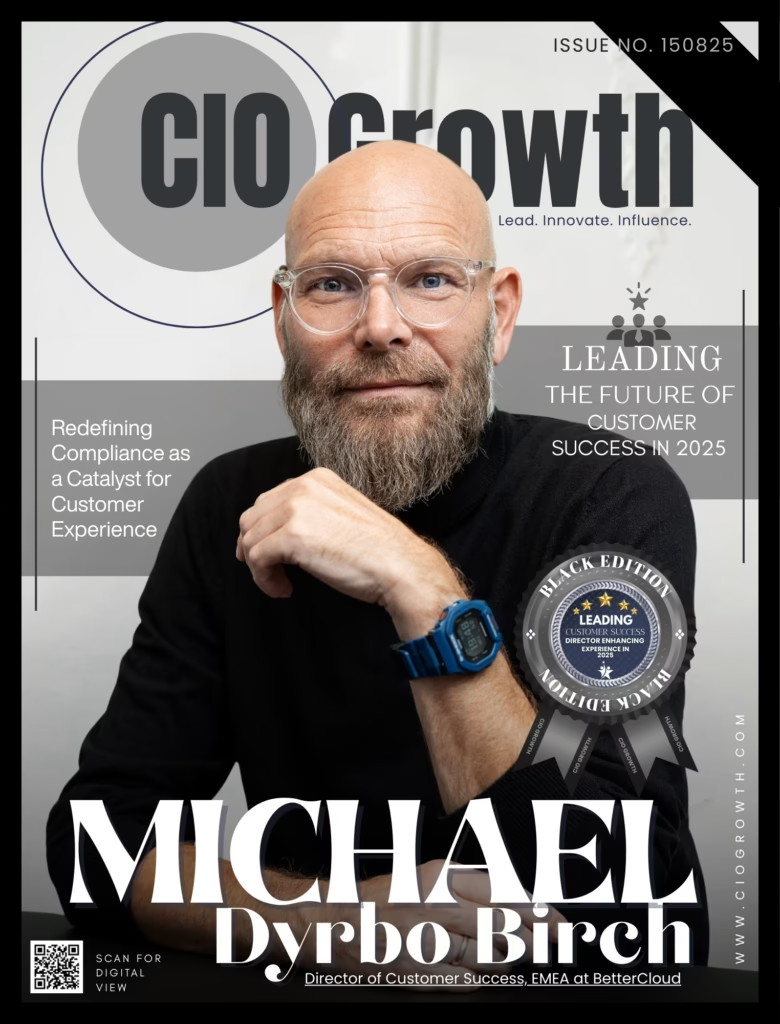
Michael Dyrbo Birch

Michael Dyrbo Birch

Michael Dyrbo Birch Director of Customer Success EMEA at BetterCloud Leading Customer Success Director Enhancing Experience in 2025 In the modern SaaS landscape, customer success is no longer just about solving problems after they happen – it’s about creating experiences that inspire loyalty, build trust, and deliver measurable value every single day. At the center of this evolution is Michael Dyrbo Birch, the Director of Customer Success, EMEA at BetterCloud, a leading SaaS management platform known for its ability to help organizations discover, manage, and secure their applications. Michael’s career story is one of transformation – shaped by technical expertise, sharpened by leadership roles across telecommunications, pharma, and tech, and driven by a relentless focus on customer-centric innovation. His approach is both visionary and practical: make compliance more automated, experiences more human, and teams more empowered. With over 15 years of experience leading customer success and support teams, Michael has built a track record that blends operational excellence with strategic foresight. Today, from his base in Copenhagen, he leads initiatives that not only help customers navigate the complex world of SaaS governance but also ensure they feel valued, supported, and confident in every interaction. His approach blends deep technical expertise, a passion for customer advocacy, and a vision for compliance automation that’s as much about people as it is about technology. From Mechanics to Management – The Unlikely Path to SaaS Leadership Michael’s professional journey did not begin in the world of SaaS dashboards or compliance workflows – it began with machinery, precision, and discipline. In the early 1990s, he trained as an Automatic Mechanic, honing skills that required patience, technical knowledge, and problem-solving under pressure. His time with the Royal Danish Air Force brought an added dimension – structure, teamwork, and a commitment to excellence that would become hallmarks of his leadership style. Later, at LEO Pharma, he transitioned from hands-on engineering roles to more complex operational challenges, building a foundation in systems thinking that would prove invaluable in the fast-changing tech sector. By the late 2000s, Michael had entered the telecommunications industry, taking on roles in CTI consulting and later as a Unified Communications Specialist. It was here that he first began to blend technical expertise with customer-facing responsibility, realizing that technology only achieves its full potential when customers truly understand and adopt it. Discovering the Power of Customer Success The turning point in Michael’s career came when he moved into leadership roles that put customer outcomes at the center. At TDC Erhverv, where he served as Head of Department – Cloud Support, he introduced multi-channel strategies that significantly improved customer satisfaction ratings. His belief that “customer support is not just about solving tickets – it’s about solving futures” began to shape the way he approached every project. Later, at Tricent, Michael stepped into a dual role that combined Head of Customer Success and Head of Customer Experience. This was a defining period where compliance automation and customer experience intersected in new and innovative ways. When a major client faced compliance risks due to millions of excessive file permissions, Michael’s team leveraged automation tools to flag, trace, and revoke risky access in record time. This was not just a technical win – it was a trust win. It proved that compliance, often seen as a burden, could be reframed as a service advantage when implemented intelligently. BetterCloud and the New Era of SaaS Management In February 2025, Michael joined BetterCloud as Director of Customer Success, EMEA, stepping into a role that perfectly aligned with his mission: to create exceptional customer journeys across all touchpoints while embedding compliance and governance into the heart of the experience. Here, his responsibilities span strategy, execution, and advocacy: Setting and executing customer success strategies to boost satisfaction, retention, and product adoption. Collaborating with sales, product, and marketing to align customer success initiatives with company-wide goals. Analyzing customer data and feedback to identify trends and areas for improvement. Acting as the voice of the customer in product development discussions. Optimizing processes to improve efficiency without sacrificing quality. Managing key accounts to ensure loyalty and long-term partnerships. In Michael’s words: “Compliance should be invisible when it works – customers should feel safe, not slowed down.” At BetterCloud, this philosophy translates into platforms and processes that help organizations automate security workflows, manage SaaS sprawl, and safeguard sensitive data – without interrupting productivity. Michael’s leadership is grounded in the belief that customer success is a growth driver. His team’s role is not merely reactive – it’s proactive, anticipating needs before they become issues The Compliance – Experience Balance One of Michael’s core beliefs is that compliance and customer experience are not competing priorities. The challenge is in designing systems where regulatory requirements are met seamlessly, so they support rather than disrupt the user journey. At BetterCloud, this means: Building unobtrusive workflows that meet strict governance standards without adding friction. Maintaining transparent communication so customers understand the value of each compliance step. Embedding feedback loops to continuously improve tools and services based on real-world usage. This mindset has helped transform compliance from being perceived as a “necessary evil” into a value proposition – one that strengthens trust, differentiates the brand, and reduces churn. Leadership in Action – Coaching, Mentoring, and Empowerment Michael’s leadership philosophy is grounded in one simple truth:  “I cannot do this alone, but as a team, we can do anything.” He invests heavily in mentorship and coaching, helping team members develop both technical expertise and strategic thinking. In one case, he mentored a new Customer Success Manager who had excellent communication skills but limited experience in proactive client engagement. Through structured mentoring, pairing with senior colleagues, and practical scenario training, the team member transformed into a confident strategist – boosting client satisfaction and retention in the process. For Michael, these wins are just as important as revenue growth. “When a team member grows, the whole organization grows,” he says. Measuring What Matters In the world of SaaS and compliance automation, success isn’t just about

Michael Dyrbo Birch Read More »

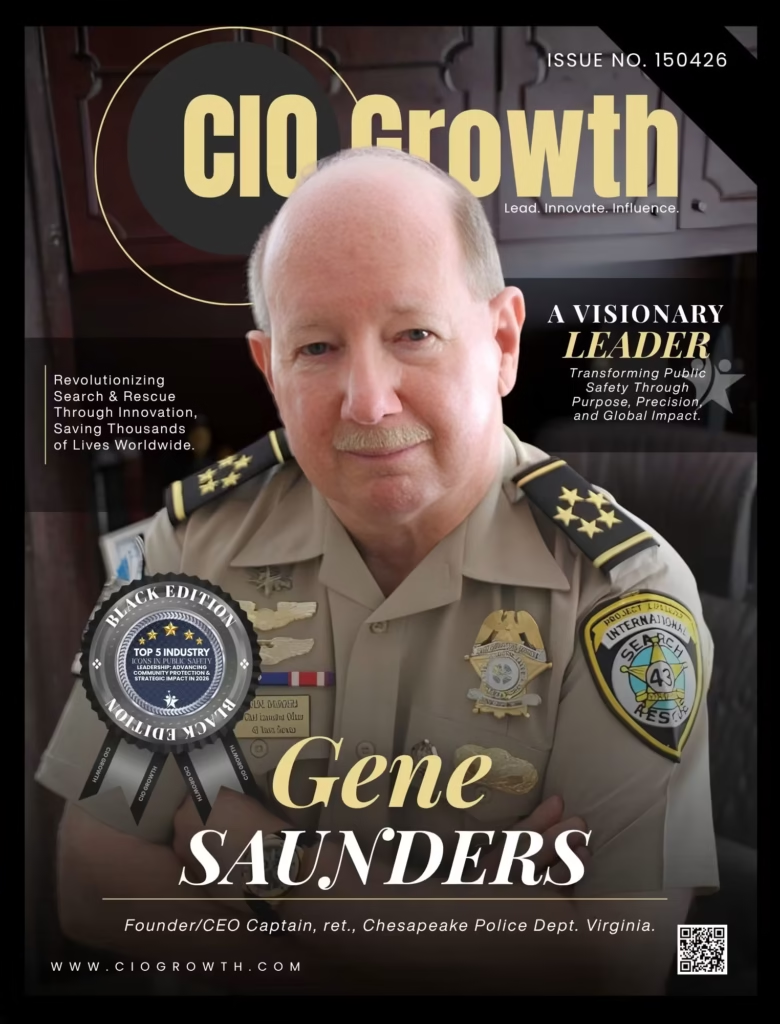
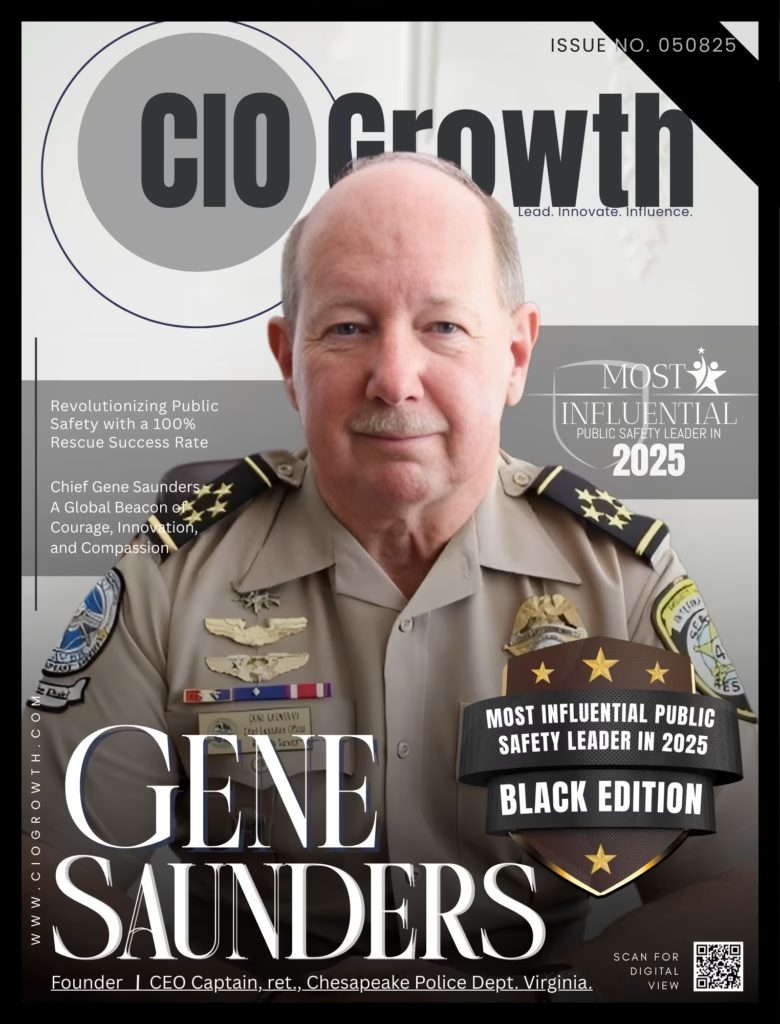
Gene Saunders

Gene Saunders

Gene Saunders Founder/CEO Captain, ret., Chesapeake Police Dept. Virginia. Most Influential Public Safety Leader in 2025 In a world where safety and security are becoming increasingly complex challenges, few individuals have made as significant and lasting an impact as Chief Gene Saunders. As the Founder and CEO of Project Lifesaver International, Chief Saunders has become a global beacon of leadership, innovation, and compassion in the field of public safety. With over five decades of distinguished service across military, law enforcement, and nonprofit sectors, Chief Saunders has not only transformed the landscape of search and rescue operations but has redefined the standards of care for at-risk individuals. Recognized as the “Most Influential Public Safety Leader in 2025” his journey is one marked by service, ingenuity, and unwavering commitment to saving lives. His influence isn’t measured solely by medals in a case (though there are many: three Silver Stars for Valor, a Presidential Commendation from Bill Clinton, Line of Duty Injury Medals, the Congressional Medal of Honor Foundation’s “Service Before Self” Award). It’s measured in minutes saved, lives preserved, and the profound peace of mind restored to thousands of families. It’s measured in the 5,000+ documented rescues achieved with a staggering 100% success rate by the organization he birthed: Project Lifesaver International. His story is not only about safeguarding lives but also about pioneering change, inspiring leaders, and building a legacy grounded in compassion, innovation, and service. A Distinguished Career in Law Enforcement and Military Service Chief Gene Saunders began his professional journey in 1968 with the Chesapeake Police Department after his military reserve unit transitioned into a military police unit. Over the course of 33 years, he served in almost every division within the department-Patrol, Vice, Narcotics, Detectives, and Training – culminating in his retirement as a Captain in 2001. He held command positions in all these divisions, showcasing a depth of leadership that spanned across multiple facets of law enforcement. In 1974, he co-founded and commanded the department’s Special Weapons and Tactics (SWAT) team, leading over 800 tactical operations in a 23-year tenure. His expertise in high – pressure, critical missions became foundational in shaping his leadership style. As Chief Investigator, he played a vital role in large-scale, multi-state, and international drug and organized crime investigations. During the 1996 Olympic Games in Atlanta, Georgia, he served as a Shift Commander on the Olympic Security Team for the soccer venue. In addition to his law enforcement achievements, Chief Saunders served in the National Guard and State Defense Force, rising through the ranks of Infantry, Airborne, and Ranger Units. He also contributed as a Senior Squadron (Ranger) Commander and Commandant of the Middle East Region Staff College in the U.S. Air Force Auxiliary (Civil Air Patrol). Certified in areas ranging from firearms and pursuit driving to raid planning and search and rescue, Chief Saunders became a thought leader in tactical law enforcement. His qualifications and contributions made him a respected mentor and role model across the country. The Birth of a Lifesaving Legacy In 1999, two years before retiring as Captain from the Chesapeake Police Department, Chief Saunders launched what would become his most enduring legacy: Project Lifesaver International. Witnessing firsthand the heartbreak and risk associated with wandering individuals suffering from Alzheimer’s, Autism, and other cognitive disorders, he envisioned a program that would change everything. Borrowing from wildlife radio tracking techniques, Saunders adapted the technology to create a people-centered rescue system. With Project Lifesaver, public safety agencies gained a proven method to locate and rescue at-risk individuals quickly and efficiently. His concept married cutting-edge technology with community policing, drastically reducing search times from hours or days to an average of just 30 minutes. From a small operation in Chesapeake, Virginia, the program grew exponentially. Today, Project Lifesaver serves over 1,800 public safety organizations across all 50 U.S. states, Washington D.C., Puerto Rico, nine Canadian provinces, and even one agency in Australia. With a 100% success rate and more than 5,000 documented rescues, Project Lifesaver stands as the gold standard in search and rescue operations for cognitively impaired individuals. Project Lifesaver: Innovation in Action What sets Project Lifesaver apart is its fusion of cutting-edge technology, specialized training, and compassionate service. The organization provides law enforcement, fire/rescue teams, and caregivers with wearable tracking devices for at-risk individuals. In the event of a wandering incident, trained responders use the devices’ signals to locate and recover individuals within an average of 30 minutes. This significantly reduces the risk of injury or death and relieves the emotional burden for families and caregivers. Project Lifesaver also offers training to first responders, equipping them with the knowledge to interact empathetically and effectively with individuals affected by cognitive conditions such as Autism, Alzheimer’s, and dementia. Through its innovations, Project Lifesaver has fundamentally transformed the landscape of public safety for vulnerable populations. It has become the gold standard for rescue and recovery services involving cognitive disorders. A Relentless Champion of Innovation Chief Saunders is not one to rest on past successes. Under his leadership, Project Lifesaver continues to innovate. The organization is actively integrating new technologies, expanding its suite of equipment, and exploring partnerships to enhance its offerings. From leveraging GPS and drone technology to refining community engagement strategies, Chief Saunders ensures Project Lifesaver remains on the cutting edge. As a certified FAA drone pilot since 1978 and a Master Flight Officer in helicopter operations, Saunders understands the power of aerial support in rescue missions. His hands-on experience in aviation and search and rescue enables him to guide the organization through strategic technology adoption, ensuring that each enhancement directly contributes to life-saving outcomes. His commitment to constant improvement has earned Project Lifesaver accolades such as Non-Profit of the Year, Most Admired Company of the Year, and Program of the Year. The organization is not just a service provider-it is a movement, driven by innovation, compassion, and unmatched success. Awards, Accolades, and Global Recognition Chief Saunders’ list of honors is both extensive and well-earned. Saunders’ influence is echoed in the symphony

Gene Saunders Read More »

Awards

Rachel Morrison

Rachel Morrison Chief Marketing Officer (CMO) EmberNest The Brand Whisperer: Building the EmberNest Legacy There’s a moment, walking into EmberNest’s sleek San Francisco headquarters, when you can sense the invisible architecture of a brand: modern, warm hues on the walls, curated playlists, the faint scent of coffee and orange blossoms. At the helm of this sensory tapestry is Rachel Morrison, the company’s magnetic CMO. She’s not just selling products; she’s crafting belonging. From Imagination to Influence Rachel’s story starts far from the glitzy heart of Silicon Valley, in a small town in upstate New York. Growing up, she was the kid who wrote and illustrated her own magazines, convinced her neighbors to read them, and staged mock advertising campaigns for lemonade stands. She majored in communications at a state university, then cut her teeth at a mid-tier advertising agency, where she quickly gained a reputation for identifying untapped market segments. But Rachel felt stifled by rigid corporate hierarchies. “I wanted to work somewhere that didn’t just talk about disruption, but actually lived it,” she remembers. Joining EmberNest That opportunity came in the form of EmberNest – a then-nascent startup aiming to revolutionize the smart home market with eco-friendly, beautifully designed lighting systems. Rachel joined as their first marketing hire and plunged head-first into uncharted waters. “My first day, the founders handed me a sketch of a lamp and said: ‘Make people fall in love with this,’” she recalls with a grin. And so she did. Defining a Brand Voice Rachel’s strategy was simple, yet audacious: instead of marketing features and specs, she told stories. “People don’t buy gadgets, they buy into a feeling – a sense of what life could be with your product in it,” she explains. She built EmberNest’s brand around the idea of sanctuary: home as a place of comfort, creativity, and connection. That meant rethinking everything from packaging (no more plastic clamshells – instead, recycled cardboard, elegant embossing) to product launches (Instagram Lives from influencers’ homes rather than stale conventions). The First Viral Hit EmberNest’s breakthrough came with the launch of their “Aurora” smart lamp. Rachel masterminded a campaign that featured diverse families sharing how they use light to mark life’s moments: birthdays, homework marathons, even quiet solo dinners. The campaign went viral. National magazines picked up the story, and sales soared. Soon, EmberNest’s clean, glowing logo was everywhere. Building the Legacy Under Rachel’s guidance, EmberNest expanded into new products – smart thermostats, security devices – all infused with the brand ethos of warmth, sustainability, and style. “Our customers aren’t just buying tech; they’re buying an experience,” she insists. She also pushed for corporate social responsibility initiatives, from planting trees for every unit sold to partnerships with artists and environmental groups. “If you want loyalty, you have to stand for something real.” Navigating Challenges Of course, the journey hasn’t been bump-free. When a competitor accused EmberNest of greenwashing, Rachel spearheaded a transparent audit and published the results online – warts and all. “Trust is built by honesty, not perfection,” she says. Her team describes her as relentlessly positive, but fiercely protective of the brand. “Rachel has this uncanny ability to sniff out what feels ‘off’ – even in a single word on a landing page,” notes a colleague. Work and Beyond For Rachel, the work is personal. “I want people to come home and feel seen – by their space, by their choices, by the brand they invite in.” She hosts quarterly workshops for young women in marketing and volunteers at a local youth art collective. Her advice to aspiring marketers? “Learn to listen – really listen – to your audience. The best brands aren’t built in boardrooms; they’re born in the messy, beautiful realities of everyday life.” As EmberNest continues to expand – international markets, voice-integrated systems – Rachel remains the company’s heart and soul, guiding it not just with strategy, but with empathy. In a world awash with noise, Rachel Morrison is crafting a legacy of authenticity – a brand that doesn’t just talk; it whispers home.

Rachel Morrison Read More »

Awards

Marcus Lee

Marcus Lee President & Co-Founder Solivana Sustainable Dreams: Marcus Lee’s Solar Revolution It’s 7 a.m., and Marcus Lee is already deep in conversation with a team of engineers in Solivana’s bustling open office. The topic: making solar energy accessible not just for the privileged or the early adopters, but for every neighborhood in America, from rural farmland to city rooftops. Early Inspiration Marcus grew up in a working-class neighborhood in Phoenix, Arizona, where, ironically, sunny days were more a source of discomfort than opportunity. “Our electric bills were always sky-high, and climate change felt intensely personal,” he remembers. Inspired to “do something” about the world’s biggest problem, Marcus studied environmental engineering, then interned with alternative energy startups. “I saw both the promise – and the problems – in the industry,” he explains. “Great tech, but terrible outreach.” Co-founding Solivana Partnering with university friend Sofia Ruiz, Marcus launched Solivana in his late twenties. Their goal: reimagine solar energy as a community movement, not just a luxury for the environmentally elite. They started with rooftop installations for churches, schools, and low-income housing projects, providing free consulting and innovative financing options. “We wanted families who were paying the most for power to be first in line for savings,” Marcus says. The Breakthrough Moment The big break came when Solivana developed a patented “snap-fit” solar panel system – simple to install, even for a novice, and half the weight of conventional panels. When a feature story in a national magazine sparked a flood of inquiries, Marcus and his team scrambled to scale up, landing partnerships with municipal governments and major utilities. Building a Movement Marcus’s vision for Solivana extends far beyond technology. He is a passionate believer in “solar equity” – the idea that clean energy should be a right, not a privilege. Solivana established a one-for-one program: for every residential install, they provide panels at cost to a community program in an underserved area. At team meetings, Marcus is collaborative but always focused. “Climate change doesn’t wait for perfect plans. We solve, we iterate, we move,” he urges. Facing the Challenges The journey has not been without setbacks. Early on, supply chain issues and unexpected regulatory hurdles nearly sank the company. Yet, Marcus’s transparent leadership kept the team unified. “I was honest about the risks, but relentless in finding solutions. Solar is inherently optimistic work – you’re betting on the sun rising, every day.” Marcus also found that education was as important as installation. “We ran block parties, school projects, online videos – anything to get people comfortable with the idea of going solar.” The response? Overwhelmingly positive. Broader Impact Today, Solivana panels dot rooftops across the Southwest and beyond. The company’s apprenticeships have launched dozens of green careers in low-income communities. “Our proudest legacy isn’t the panels – it’s the people whose lives have changed because of them,” Marcus notes. He regularly speaks at schools, industry events, and city councils, evangelizing for an inclusive, sustainable future. His commitment is personal – his own childhood home now sports the company’s flagship panels, the bills shrunk and pride evident in his parents’ voices. Looking to the Sunshine Future Looking ahead, Marcus dreams even bigger: modular solar for apartment blocks, community microgrids, open-source energy monitoring tools. “I want every kid growing up in the sun to know the future can be as bright as their skies,” he says. Solivana’s story is a testament to optimism and perseverance – the conviction that sustainability doesn’t have to be sacrificed for scale, and that one spark, carefully nurtured, can ignite a movement. As Marcus gazes over a model of the city, pocked with miniature blue panels, he smiles. “This isn’t just about solar power,” he says. “It’s about people power – when communities come together, there’s nothing we can’t change.”

Marcus Lee Read More »

Awards

Ethan Turner

Ethan Turner Chief Technology Officer (CTO) Axionix Labs Engineering the Future: Inside Axionix Labs At the cutting edge of robotics, where code meets metal and imagination bends reality, Ethan Turner is quietly – and persistently – engineering a revolution. As CTO of Axionix Labs, Ethan’s mission is as audacious as it is clear: build machines that work for people, not the other way around. Early Passions, Early Challenges Growing up in Seattle, Ethan dismantled everything he touched – remote controls, alarm clocks, even the family toaster. “I just had to know how it worked,” he laughs. Later, at MIT, he built his first autonomous drone, followed by a robotic arm programmed for delicate surgery simulations. Ethan’s professors described him as a tinkerer with a philosopher’s heart. “Tech is only as good as the world it helps create,” Ethan insists. Founding Axionix Labs After earning his degree, Ethan worked stints at tech giants, but felt stifled by bureaucracy. “I wanted to innovate not just incrementally, but fundamentally.” He formed Axionix Labs with two fellow engineers in a rented garage – humble beginnings for a company destined to change the face of automation. Their original vision: make robotics easy, adaptable, and affordable for small businesses. “Not every company can hire a fleet of engineers. We wanted anyone – a grocer, a mechanic, a teacher – to harness robotics without a PhD,” Ethan explains. The First Breakthrough Axionix’s early models were simple – assistive robotic carts for warehouses, gesture-controlled loaders, basic maintenance bots. But their modular architecture, “plug and play” controls, and low learning curve set them apart. When a viral TikTok video showed a small family bakery doubling its output thanks to Axionix’s baking assistant robot, demand exploded. The team scrambled to meet orders, hiring rapidly and moving into a larger facility. Building for Impact Ethan’s leadership is inclusive and humble. He spends as much time on the assembly line as in board meetings. “You can’t build great robots in a vacuum,” he says. His philosophy extends beyond hardware: Axionix invests heavily in K-12 STEM outreach, hosts robotics competitions, and partners with technical colleges, believing that the next wave of engineers shouldn’t look exactly like him. “We’re building not just machines, but opportunities,” he notes. Facing the Headwinds With success came scrutiny. Automation is a loaded topic – some fear that robots will replace rather than empower workers. Ethan is honest about these concerns. “Our role isn’t to destroy jobs, but to remove the drudgery – so people can focus on creative, fulfilling work.” Axionix’s job transition program provides training to help displaced workers transition into higher-skilled roles. “Tech should lift everyone, not just increase margins,” he says. Looking Ahead Axionix Labs is now rolling out its first AI-driven service bots for hospitals and care facilities – a project close to Ethan’s heart. “My grandmother had a fall, and I realized how much independence a simple, well-designed robot could give someone.” Ethan has turned Axionix into not just a business, but a movement for “human-centric automation.” Looking at the years ahead, his sights are set high. “I want a world where robots are teammates and lifelines, not threats. That’s the future we’re building – one line of code at a time.” In an era obsessed with disruption, Ethan Turner stands out for his blend of innovation and humanity. At Axionix Labs, the future of work isn’t cold, clinical, or distant; it’s collaborative, compassionate, and, above all else, human.

Ethan Turner Read More »

Awards

Olivia Carter

Olivia Carter Founder & CEO Bluestone Logic From Dorm Room Visionary to Digital Tycoon At twenty-two, while most of her peers were fretting over their next exam or spring break plans, Olivia Carter was hunched over a battered MacBook, poring over thousands of lines of code that would become the bedrock of Bluestone Logic – a fast-rising star in the data analytics and AI sector. From Humble Beginnings Bluestone Logic’s journey began in the cramped corner of Olivia’s college dorm room. “It wasn’t much bigger than a walk-in closet, but it was my entire world,” Olivia recalls with a laugh. Early on, she grappled with balancing computer science classes at a midwestern university, a part-time waitressing job, and her relentless drive to solve inefficiencies she saw plaguing enterprise decision-making. “I was fascinated that with all the data companies collect, so few could actually use it meaningfully,” says Olivia. “I wanted to create a tool that would make AI easy and accessible for every organization, regardless of size.” Her ambitious vision: democratize machine learning. With that in mind, she began developing what would become Bluestone Logic – a platform that translates complex datasets into actionable, understandable insights, powered by proprietary AI models. The First Break Success didn’t come overnight. Olivia recounts long nights fueled by pizza and cold brew, debugging her beta version and recruiting classmates to test early prototypes of Bluestone Logic. The real turning point – her “aha” moment – came when a regional logistics firm, struggling with route optimization, implemented her algorithm on a trial basis. The result? A 30% reduction in delivery times and significant savings. Word spread, and soon Bluestone Logic went from an experiment to a venture. Olivia entered her project in a university startup competition, nabbing first place and earning a modest but meaningful $10,000 in seed funding. With this boost, she hired her first two employees – computer science majors like herself – and moved from her dorm room into a shared workspace. The Growth Curve What followed is the stuff of entrepreneurial legend. Olivia’s relentless hustle landed Bluestone Logic its first wave of business customers in logistics, retail, and finance. The company’s UI-first philosophy – “explainable AI for ordinary people” – won fans among non-technical users. “Our biggest strength is empathy,” Olivia insists. “We always ask how a real user, not a data scientist, would want to interact with insights.” Within two years, Bluestone Logic had grown to a 30-person team. Olivia leaned heavily on a culture of curiosity: “We’re not afraid to ask dumb questions, challenge each other, or admit we don’t know something.” Facing the Doubts Not everyone believed in her mission. Early investor meetings sometimes ended with skeptical looks. “I was a young, black, female founder in tech, pitching AI in a room full of grey suits,” Olivia recalls. “I got told a lot – sometimes kindly, sometimes not – that investors were looking for ‘a safe bet.’” It motivated her even more. She doubled down, developing case studies and building relationships with customers who turned into vocal advocates. “Instead of changing myself to fit their mold, I let the product speak for itself.” Breaking Barriers Today, Bluestone Logic powers analytics for hundreds of companies across North America. Their proprietary algorithm – known for its clarity and speed – helps teams from HR to supply chain management make better decisions, faster. But Olivia is quick to point out that they’re just getting started. Her leadership style is both inclusive and transparent. She holds open office hours, encourages bottom-up innovation, and stresses mental health as much as product delivery. “You can’t have creative breakthroughs if you’re burned out or afraid to fail,” she says. Giving Back and Looking Forward Olivia hasn’t forgotten her roots – to this day, Bluestone Logic donates a portion of revenues to scholarships for STEM students, with special emphasis on women and people of color. So, what’s next for Bluestone Logic? Olivia’s eyes light up. “I want us to be the default intelligence engine for every mid-market business in the U.S.,” she declares – then quickly adds, “but never at the cost of who we are. Tech should empower everyone, not just the biggest or loudest.” As the sun sets over the company’s bustling downtown office, Olivia reflects on her journey. “You don’t have to wait for someone to give you permission to start,” she says, smiling. “You just have to get started, and the rest – if you care enough – will follow.”

Olivia Carter Read More »

Blockchain and Decentralization: The Future of Trust and Innovation

Blockchain and Decentralization: The Future of Trust and Innovation

Blockchain and Decentralization The Future of Trust and Innovation In a rapidly evolving digital world, blockchain and decentralization have emerged as transformative technologies that are reshaping industries, disrupting traditional business models, and offering new possibilities for trust, transparency, and autonomy. Originally popularized by cryptocurrencies like Bitcoin, blockchain technology has grown beyond its origins to become a powerful tool for decentralizing systems, reducing inefficiencies, and solving complex problems in areas ranging from finance and supply chain management to healthcare and governance. This article explores the fundamentals of blockchain and decentralization, their key applications, and the revolutionary potential they hold for the future of business and technology. What is Blockchain? At its core, blockchain is a distributed digital ledger that records transactions across multiple computers in a secure, immutable, and transparent manner. Each block in a blockchain contains a list of transactions, and every block is linked to the previous one, forming a chain. This structure ensures that once data is recorded, it cannot be altered without changing every subsequent block, making it nearly impossible to tamper with. Unlike traditional databases controlled by a central authority, a blockchain operates on a peer-to-peer (P2P) network, where multiple participants (or nodes) maintain a copy of the ledger. This decentralization is one of blockchain’s most important features, as it eliminates the need for intermediaries and centralized control, ensuring that the system is inherently trustless—meaning users do not need to rely on any single entity to verify or validate transactions. Decentralization: Breaking Free from Central Authority: Decentralization refers to the distribution of decision-making power and control away from a centralized authority. In the context of blockchain, decentralization allows participants to interact directly with one another without relying on middlemen such as banks, payment processors, or other third parties. By eliminating these intermediaries, decentralized systems aim to reduce costs, increase security, and enhance transparency. One of the key benefits of decentralization is that it distributes control across a network of users, making the system more resilient to failures, hacks, or censorship. For instance, in a traditional banking system, a single point of failure, such as a breach in the central server, could compromise the entire network. In contrast, a decentralized blockchain system continues to function even if some nodes go offline, as other participants maintain the integrity of the ledger. Key Applications of Blockchain and Decentralization: Cryptocurrencies and Decentralized Finance (DeFi): The most well-known application of blockchain technology is cryptocurrency. Cryptocurrencies like Bitcoin and Ethereum rely on blockchain to provide a decentralized and transparent system for financial transactions. Unlike traditional currencies, cryptocurrencies are not controlled by any government or central bank, making them resistant to inflationary policies or political influence. Beyond digital currencies, blockchain has given rise to a new financial ecosystem known as Decentralized Finance (DeFi). DeFi refers to a suite of financial services built on blockchain technology that eliminates the need for traditional financial institutions. Through smart contracts—self-executing contracts with terms directly written into code—DeFi platforms can offer lending, borrowing, trading, and insurance services without intermediaries. This innovation not only reduces transaction fees but also increases access to financial services, particularly for the unbanked or underbanked populations around the world. Supply Chain Management: Blockchain’s ability to provide an immutable and transparent record of transactions makes it an ideal solution for supply chain management. Traditionally, supply chains have been highly complex, involving multiple intermediaries and manual processes that can be prone to inefficiencies, errors, and fraud. Blockchain enables real-time tracking of products from their origin to the final consumer, ensuring the authenticity of goods and reducing the risk of counterfeiting. For example, in the food industry, blockchain can be used to trace the journey of produce from farm to table, ensuring that products are sourced ethically and sustainably. In industries like pharmaceuticals, blockchain can help verify the authenticity of medicines and reduce the circulation of counterfeit drugs, which is a major global issue. Digital Identity and Privacy: One of the most exciting potential uses of blockchain is in the realm of digital identity management. With increasing concerns over data privacy and security, blockchain provides a way for individuals to have control over their personal information without relying on centralized entities like governments or corporations. Using blockchain-based digital identities, individuals can securely store and share their personal information with third parties without revealing more than necessary. This concept is known as self-sovereign identity (SSI), where users have full ownership of their data, and only they can decide who has access to it. This could revolutionize industries like healthcare, where patients could share medical records with doctors while ensuring their data remains private and secure. Smart Contracts and Automation: A smart contract is a self-executing contract with the terms of the agreement directly written into lines of code. These contracts automatically execute when predetermined conditions are met, without the need for intermediaries. This innovation has widespread applications across industries, as it reduces reliance on third parties, minimizes transaction costs, and accelerates processes that traditionally required manual oversight. In real estate, for instance, smart contracts can be used to automate the transfer of property ownership once payments are made, eliminating the need for escrow agents or title companies. In insurance, smart contracts can automatically trigger payouts to policyholders based on real-time data, such as weather conditions or flight delays. Governance and Voting: Blockchain technology also has the potential to revolutionize governance and voting systems. Traditional voting methods are often criticized for being inefficient, prone to fraud, and lacking transparency. Blockchain offers a secure and transparent solution by creating a tamper-proof ledger of votes, ensuring that each vote is counted accurately and fairly. Moreover, blockchain can enable decentralized governance models where decision-making power is distributed among participants rather than concentrated in a central authority. This is particularly useful in decentralized organizations or communities, where stakeholders can vote on proposals or changes to the system in a transparent and democratic manner. The Future of Blockchain and Decentralization: While blockchain and decentralization are still in their early stages, their potential to

Blockchain and Decentralization: The Future of Trust and Innovation Read More »