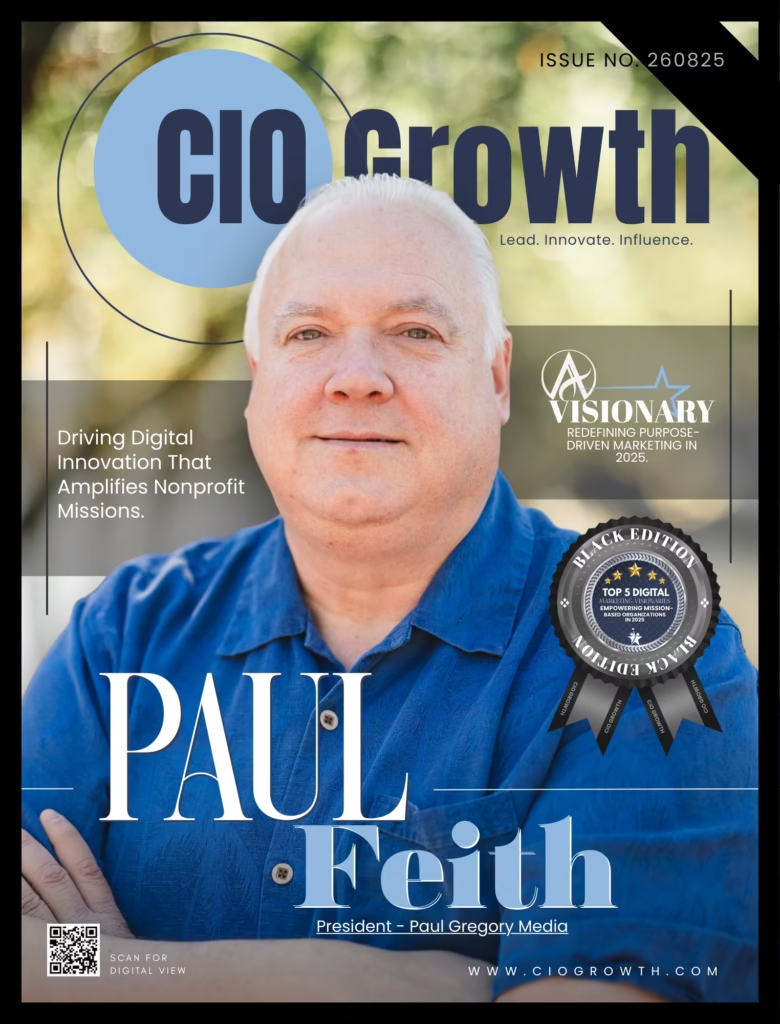
Paul Feith
Paul Feith President Paul Gregory Media Top 5 Digital Marketing Visionaries Empowering Mission-Based Organizations in 2025 In today’s digital age, where a compelling online presence can make or break the success of mission-based organizations, visionary leaders in digital marketing are more critical than ever. Among those shaping the future is Paul Feith, an innovator, strategist, and empathetic leader whose agency, Paul Gregory Media (PGM), has become synonymous with empowering nonprofits to magnify their impact through digital excellence. This article dives deep into Paul Feith’s inspiring journey, the philosophy that drives his company, and his groundbreaking work in 2025, spotlighting why he is a leading figure among the top digital marketing visionaries for mission-driven organizations. Early Passion for Technology and Creativity Paul Feith’s story begins in the late 1990s, a period marked by the rise of the internet and digital media. In 1998, Paul started his professional career in the new media department at Playboy Enterprises, where he immersed himself in the burgeoning world of graphic design, website development, and content delivery systems. These formative years exposed him to the intersection of creativity and technology, fuelling a passion that would steer much of his later work. At a time when the digital landscape was still in its infancy, Paul embraced learning every facet of the field – from database programming to digital marketing strategies – and remained agile amid the rapidly evolving tech scene. This skill set positioned him uniquely as an early adopter of tools and trends that would become crucial pillars in digital marketing today. Entrepreneurial Beginnings and the Birth of Paul Gregory Media In 2006, armed with experience and a vision, Paul founded Paul Gregory Media in Naperville, Illinois. The company’s name pays homage to his first and middle name, Paul Gregory, symbolizing a personal stamp on the business’s ethos. Initially a one-man endeavour focused on graphic design, PGM concentrated on building a solid reputation for creativity and client commitment. During these early years, the 2007 economic recession posed significant hurdles for the company. Budgets tightened across industries, especially in marketing, and competition intensified. Rather than scaling down, Paul saw an opportunity to engage more deeply with his community. He focused on pro bono work and partnerships with local nonprofits, providing them affordable, quality marketing solutions to help them grow. This community-first approach sowed seeds for PGM’s later specialization and its embedded social mission. A Strategic Shift Toward Mission-Based Organizations By 2011, Paul’s increasing involvement with nonprofit boards such as Giving DuPage immersed him in the unique challenges mission-driven organizations face. He realized nonprofits often lacked the digital know-how and resources essential for effective fundraising, advocacy, and volunteer engagement in a digital-first world. Recognizing this gap, Paul transitioned PGM from a general marketing company to a niche full-service digital agency focused primarily on serving nonprofit clients. PGM expanded its offerings to include comprehensive digital strategies that leveraged branding, website development, content marketing, social media, paid media, user experience, and video production tailored to the distinct needs of organizations with a cause. This strategic pivot not only differentiated PGM but also aligned the agency’s business objectives with Paul’s passion for social impact. The Certified B-Corporation Commitment A landmark moment for Paul Gregory Media came in 2020, when the agency earned Certified B-Corporation status. This certification is awarded to companies meeting rigorous standards of social and environmental performance, accountability, and transparency. It solidified PGM’s position not just as a marketing agency but as a socially responsible enterprise committed to purpose alongside profit. The B-Corp certification aligns with PGM’s core values centered on business ethics, community involvement, and sustainability. It frames the company’s strategic decision-making processes and daily operations, ensuring that social impact and client success are deeply integrated with employee welfare and environmental consciousness. Cultivating an Inclusive and Supportive Culture Beyond client work, Paul Feith’s leadership philosophy is evident in the culture he cultivates internally. PGM operates as a 100% remote agency, embracing flexibility and work-life balance with a 32-hour four-day workweek and an unlimited paid time off policy. This progressive approach attracts top digital marketing talent who prioritize meaningful work alongside personal wellbeing – key to retaining a workforce driven by empathy and dedication to mission-driven causes. Paul personally recruits marketers and creatives with nonprofit experience or a gifting mindset to foster a team that truly understands the client’s perspective. The company’s leadership invests in ongoing employee development through continuous learning programs, ensuring team members stay on the cutting edge of digital marketing trends and technologies. Financially, PGM pledges 1% of its gross revenue annually in cash donations and dedicates 15% of their time to pro bono service – statistics that rose significantly during the COVID-19 crisis to meet intensifying nonprofit needs. This embedded culture of generosity is not just rhetoric; it drives higher community engagement and a stronger sense of purpose among employees, reinforcing PGM’s brand as a social enterprise. Innovative Marketing Strategies Empowering Nonprofits Under Paul’s guidance, PGM embraces a forward-thinking marketing philosophy that fuses data-driven insights with creative storytelling. One prominent innovation is the adoption of Pillar-Based Marketing, a strategy that uses AI to identify and cluster content around high-value SEO keywords. This technique accelerates online visibility and engagement for nonprofits, helping them compete effectively in saturated digital spaces. For example, a typical client will experience a 40% surge in website traffic and converted leads through these AI-powered content clusters. Such cases demonstrate how PGM uses technology not as an end but as a means to amplify mission-driven messaging. Paul also leads PGM’s exploration of emerging trends like AI strategy automation, privacy-first digital tactics (especially in anticipation of a cookieless future), strategic use of short-form videos, influencer marketing designed for social impact, and omnichannel campaigns that integrate online and offline donor experiences. His insistence on continuous A/B testing and real-time analytics fosters a culture of experimentation and agility, critical for sustained nonprofit success. Community Leadership and Board Involvement Paul’s engagement with nonprofit governance extends deeply into board memberships and philanthropic endeavours. Since 2011, he has