CIO Growth

Magazines

Thomas Gelmi

Thomas Gelmi

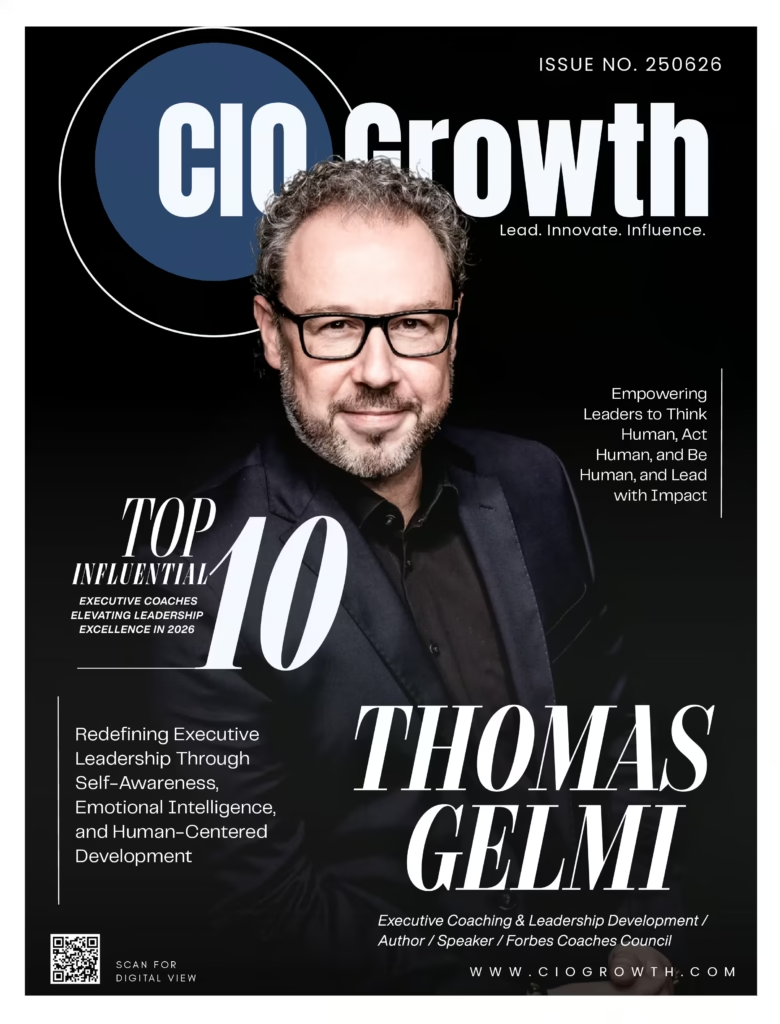
Thomas Gelmi Executive Coaching & Leadership Development / Author / Speaker / Forbes Coaches Council Top 10 Influential Executive Coaches Elevating Leadership Excellence in 2026 In an era where leadership is increasingly tested by complexity, technological disruption, and constant change, the ability to lead with authenticity has become a defining competitive advantage. Few professionals have championed this philosophy as consistently as Thomas Gelmi, an internationally recognized executive coach, leadership development expert, keynote speaker, and founder of Movadis AG, operating under the brand GELMI InterPersonal Development. Now featuring in Top 10 Influential Executive Coaches Elevating Leadership Excellence in 2026, Thomas has dedicated more than two decades to helping leaders discover that exceptional leadership begins not with authority, but with self-awareness, trust, and genuine human connection. Building Leadership from the Human Core Thomas Gelmi’s professional journey has always centered on understanding people – their behaviors, motivations, and the factors that enable them to perform, collaborate, and lead effectively under pressure. His early career in the aviation industry became an invaluable foundation, exposing him to environments where communication, responsibility, trust, and leadership are not merely theoretical concepts but critical elements that directly influence outcomes. Working closely with airline cabin crews and later designing and facilitating leadership development programs for aviation professionals, Thomas gained firsthand insight into the importance of emotional intelligence, teamwork, and interpersonal effectiveness. These experiences shaped a leadership philosophy that would later define his career. Recognizing that leadership extends far beyond technical competence, Thomas transitioned into executive coaching and leadership development, establishing Movadis AG and its leadership development brand, GELMI InterPersonal Development. Since then, he has worked with executives, leadership teams, and organizations across industries and continents, empowering professionals to strengthen self-awareness, leadership presence, emotional regulation, and communication effectiveness. At the heart of his work lies a simple yet profound philosophy: “Think human. Act human. Be human.” This guiding principle reflects Thomas’s conviction that while leadership tools and frameworks have value, sustainable leadership excellence ultimately depends on the leader’s mindset, emotional maturity, and ability to build and maintain meaningful relationships. A Philosophy That Reached Beyond Coaching One of the defining milestones in Thomas’s career was the publication of his first book, Breakthrough, which explored generally valid and highly effective leadership principles through the unique lens of airline operations. More than a professional achievement, the book allowed him to articulate years of practical observations into a cohesive leadership philosophy centered on responsibility, communication, awareness, and trust. The publication significantly expanded his international reach, positioning him as a thought leader capable of translating complex leadership challenges into practical, human-centered solutions. It also opened new opportunities to collaborate with senior executives and organizations seeking leadership development that extends beyond traditional management training. Yet, Thomas measures success differently than many professionals. While books, keynote stages, and international recognition represent visible milestones, he believes the most meaningful breakthroughs happen quietly – when a leader becomes aware of limiting behavioral patterns, rebuilds trust within a team, transforms difficult conversations into opportunities for growth, or begins leading with greater clarity and emotional maturity. These moments, though less visible, represent the lasting impact of effective executive coaching. Building upon this foundation, Thomas is currently developing his next book, further expanding his “Think human. Act human. Be human.” philosophy and exploring its practical relevance for modern leadership in an increasingly complex world. Leading Through Complexity in the AI Era Thomas believes executive coaching and leadership development are entering one of the most significant periods of transformation in recent history. For decades, leadership programs largely emphasized competencies, models, and management techniques. While these remain valuable, they are no longer sufficient for leaders navigating today’s rapidly evolving business landscape. Organizations now operate in environments shaped by hybrid work, digital transformation, artificial intelligence, global uncertainty, and relentless change. These realities require leaders who possess far more than technical expertise,  methods and techniques – they demand individuals capable of remaining emotionally grounded while guiding others through ambiguity. According to Thomas, the future of leadership must become increasingly human rather than increasingly digital, technical or mechanical. Although technology and AI will continue to enhance learning, personalization, and accessibility, they cannot replace essential human qualities such as empathy, presence, care, courage, and trust-building. One area Thomas considers particularly critical is nervous system regulation. He explains that leadership influence extends far beyond words. Leaders continuously communicate through their emotional state. During periods of stress or uncertainty, an unregulated nervous system can narrow perception, increase defensiveness, reduce empathy, and negatively affect decision-making. As a consequence, the nervous systems of others are negatively affected as they naturally and unconsciously co-regulate, impairing their behavior, decision-making and ultimately performance. Conversely, leaders who regulate themselves are better equipped to think clearly, communicate calmly, listen attentively, and foster psychological safety within their teams, the main factor for high performance. Thomas emphasizes that nervous system regulation should not be viewed as a wellness initiative but as a fundamental leadership capability – one that directly shapes organizational culture, collaboration, and performance. Through GELMI InterPersonal Development, he continues helping organizations shift away from leadership driven by pressure and image management and toward high performance leadership grounded in conscious human impact. Leadership Development is Personality Development For aspiring leaders, Thomas offers advice that challenges conventional notions of influence. Before attempting to increase one’s impact, he encourages professionals to first understand the impact they are already having on those around them. Leadership development, he believes, is ultimately personality development and starts with self-awareness – not as a soft skill, but as an essential professional discipline. Without understanding personal behavioral patterns, emotional triggers, assumptions, and internal responses, leaders risk unconsciously projecting fear, ego, control, or anxiety onto others, regardless of their intentions. Thomas also emphasizes the importance of recognizing the connection between physiological state and leadership behavior. Under stress, leaders often assume they are making objective decisions, when in reality, their nervous system significantly influences perception, interpretation, and response – and the states of those around them. The true measure of leadership, he explains, lies in the quality
Thomas Gelmi Read More »

Dr. Santarvis Brown

Dr. Santarvis Brown

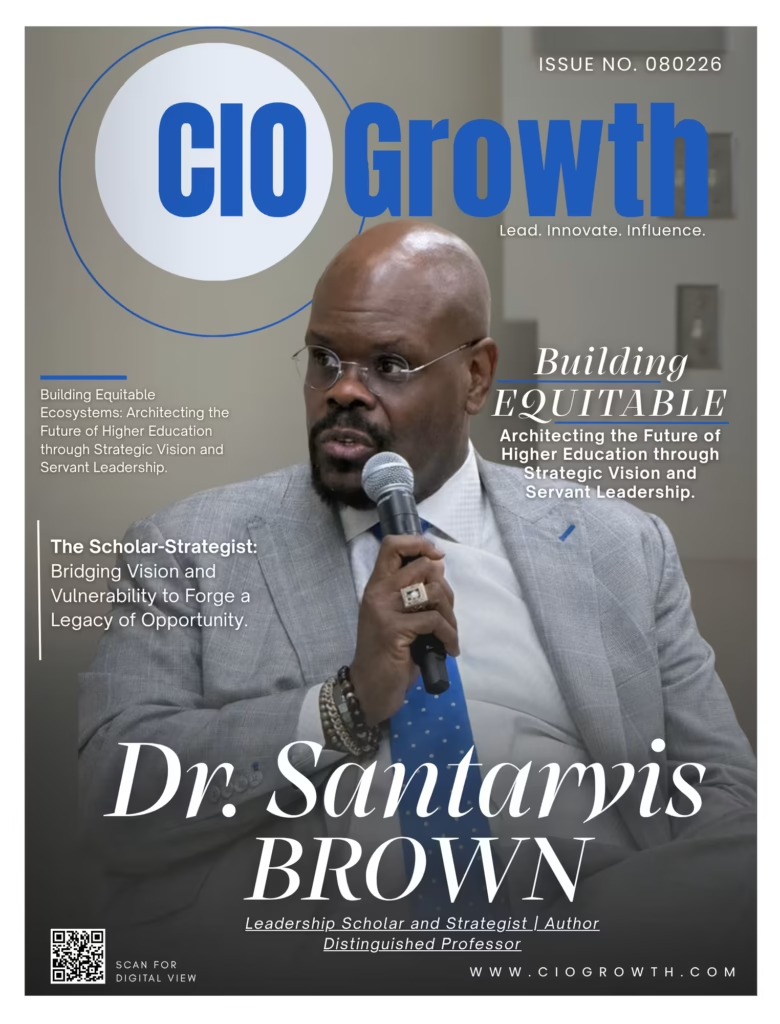
Dr. Santarvis Brown Leadership Scholar and Strategist | Author | Distinguished Professor Leading Leadership Scholars and Strategic Thinkers in 2026 The Architect of Equitable Opportunity: A Conversation with Dr. Santarvis Brown In an era where the tectonic plates of higher education are shifting beneath our feet, the need for leaders who possess both visionary foresight and grounded operational acumen has never been greater. It is a rare privilege to feature an individual who embodies this dual mandate. Dr. Santarvis Brown stands as a colossus in the landscape of modern academia – a dynamic executive leader, full professor, and global scholar whose life’s work is a masterclass in transforming mission-driven institutions. As we explore the future of learning in 2026, Dr. Brown offers a blueprint for resilience, relevance, and radical inclusion. His journey is not merely a career trajectory; it is a testament to the power of interdisciplinary thought and servant leadership. A Foundation of Interdisciplinary Excellence Dr. Brown’s path to the upper echelons of academic leadership is as diverse as it is distinguished. Rooted in a profound commitment to expanding access, equity, and excellence, his two-decade career spans universities, nonprofit organizations, and national boards. His academic tapestry includes multiple advanced degrees across business, education, law, divinity, and leadership – a combination that reflects his belief that the most complex problems require multidimensional solutions. “My journey is shaped by faith, purpose, and a commitment to building systems where individuals and communities can thrive” Dr. Brown reflects. This ethos has guided him through roles as Chief Academic Officer, Director of Academic Affairs, Chair of Graduate Business, and Superintendent. In these capacities, he has managed multi-million-dollar portfolios and launched new schools and degree programs, specifically designed to lift first-generation, adult, and historically marginalized learners. Milestones of Impact When asked about his most significant achievement, Dr. Brown points not to personal accolades, but to the systemic structures he has built to empower others. A standout moment in his career was spearheading the development of the Executive MBA and Doctor of Business Administration programs at Excelsior University. These initiatives did not just add to the curriculum; they strategically repositioned the university, creating vital pathways for emerging leaders. Equally transformative was his tenure as Chief Academic Officer at Miami Regional University. There, he guided the institution through explosive enrollment growth while launching high-demand schools, including the Doctor of Nursing Practice and MBA programs. These efforts generated millions in tuition revenue while creating critical pipelines into the healthcare and business sectors. Yet, it is the symbolic recognition of his impact that resonates most broadly. Being featured on the Nasdaq screen in Times Square serves as a powerful visual metaphor for his career: a leader whose work commands a global stage, yet remains firmly grounded in the success of the students and communities he serves. Navigating the Next Frontier of Education Dr. Brown views the current transformation of higher education not with trepidation, but with eager anticipation. He identifies the key drivers of change as the rise of virtual learning environments, AI-driven tools, flexible credentialing, and a laser focus on workforce alignment. “The institutions that will succeed are those that are nimble, equity-centered, and innovative” he asserts. As Chair of Graduate Business at Excelsior University and a sought-after consultant, Dr. Brown is actively shaping this evolution. He is championing a future defined by: Tech-enabled, high-impact learning models that engage students beyond the traditional lecture. Stackable credentials and advanced graduate pathways that allow for lifelong career mobility. Equity-focused program design that ensures innovation does not leave the most vulnerable behind. Opportunity ecosystems forged through strategic philanthropic and community partnerships. His vision is clear: to ensure that as education evolves technologically, it remains inherently human-centered, serving as a powerful instrument of equity and advancement. The Wisdom of Servant Leadership For the aspiring leaders and strategic thinkers reading this, Dr. Brown offers a manifesto for impactful leadership. He dismantles the myth of the egocentric titan, replacing it with a model of stewardship and vulnerability. “Leadership is not about titles – it is about stewardship, courage, and the willingness to serve with integrity” he states. His advice is distilled into actionable pillars: Lead with purpose, not ego: True influence expands when the mission eclipses the individual. Stay committed to learning: The most effective leaders are perpetual students in a rapidly changing world. Build with people, not around them: Mobilize diverse voices and create space for others to rise. Perhaps most poignantly, Dr. Brown advises leaders to “embrace both vision and vulnerability.” He speaks to the power of “leading while limping” – the courage to lead with authenticity and imperfection. In his view, this is not a weakness; it is the crucible in which trust, character, and lasting impact are forged. Conclusion Dr. Santarvis Brown represents the archetype of the 2026 leader: a scholar who builds bridges between theory and practice, an executive who prioritizes equity over ego, and a strategist who prepares institutions not just for the future, but for the students who will inherit it. As we continue to navigate the complexities of a changing world, his voice is not just relevant – it is essential.

Dr. Santarvis Brown Read More »

Gene Saunders

Gene Saunders

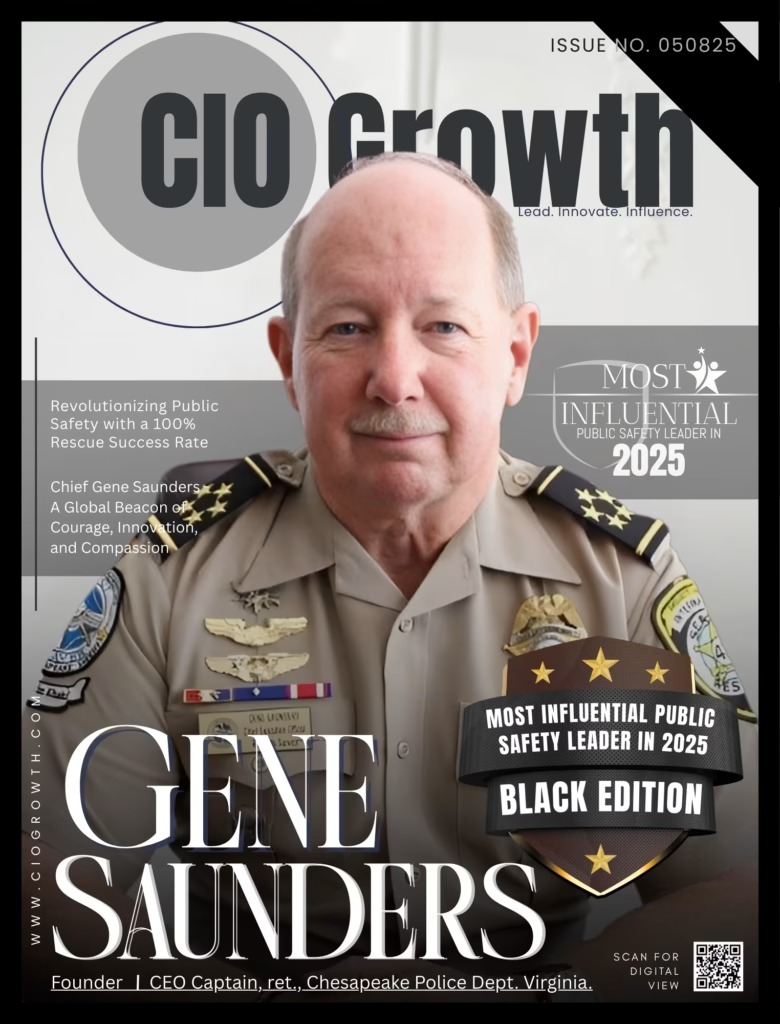
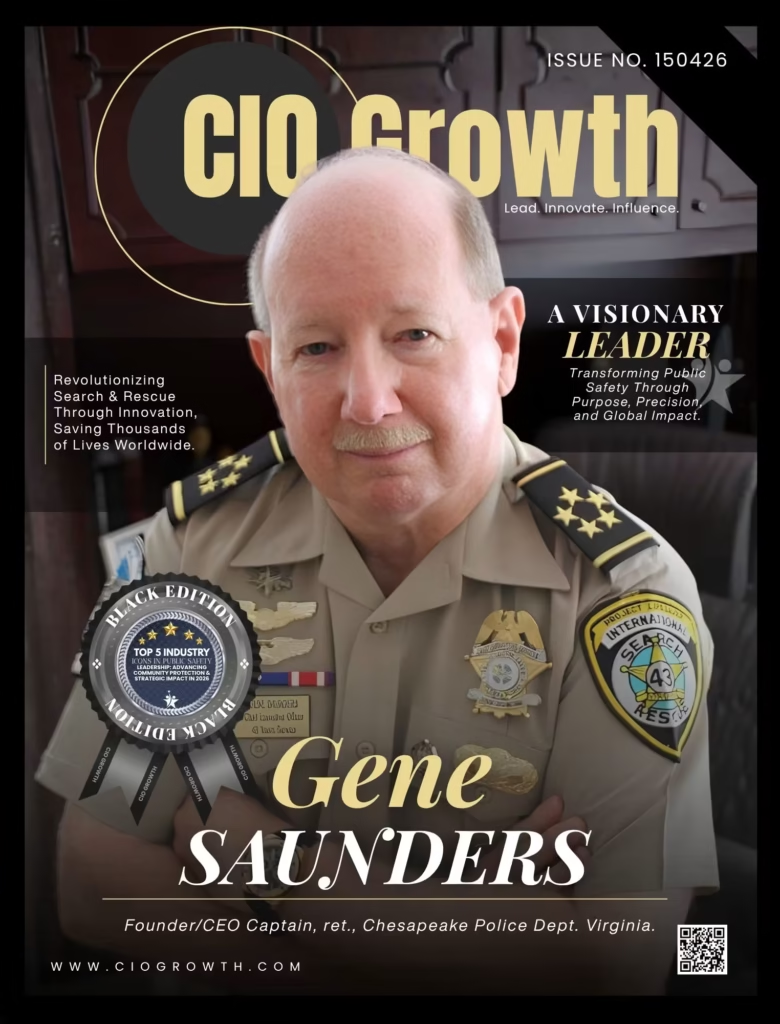
Gene Saunders Founder/CEO Captain, ret., Chesapeake Police Dept. Virginia Top 5 Industry Icons in Public Safety Leadership: Advancing Community Protection and Strategic Impact in 2026 In the evolving landscape of public safety, where innovation meets responsibility, Gene Saunders stands as a defining force – an individual whose lifelong commitment has reshaped how communities protect and recover their most vulnerable members. With a career spanning decades of service, leadership, and groundbreaking initiatives, Saunders exemplifies what it means to lead with purpose, foresight, and enduring impact. A Journey Defined by Service, Adaptability, and Purpose Gene Saunders’ journey began in 1963, immediately after graduating high school, when he entered active duty with the U.S. Army National Guard. This early immersion in discipline, structure, and service laid a powerful foundation for the decades that followed. Even in his early years, Saunders demonstrated a willingness to embrace diverse experiences – holding various roles, including a period as a professional musician in a rock band – before fully committing to a path of public service. His return to structured service was marked by his enrollment in the Army National Guard Officer Candidate School, where he earned his commission as an officer. This milestone not only sharpened his leadership capabilities but also reinforced his commitment to serving communities with integrity and accountability. In 1968, Saunders joined the Chesapeake Police Department in Virginia, beginning a 33-year tenure that would define his legacy in law enforcement. Throughout his career, he served in every unit within the department, both as an officer and as a commander. This rare breadth of experience provided him with a holistic understanding of policing – from ground-level operations to high-level strategic leadership – allowing him to lead with both insight and empathy. Pioneering Tactical Excellence and Operational Leadership One of the most defining chapters of Saunders’ career came in 1974 when he established the Police Special Weapons and Tactics (SWAT) Team. At a time when such units were still evolving, Saunders demonstrated remarkable foresight in recognizing the need for specialized, highly trained response teams capable of managing critical incidents. As commander, he led over 800 operations across a span of 23 years, building a track record defined by precision, discipline, and consistent success. Under his leadership, the SWAT team became a model of operational excellence – balancing tactical strength with calculated decision-making and risk management. Beyond the numbers, Saunders’ leadership helped institutionalize a culture of preparedness and professionalism. His approach emphasized training, coordination, and accountability, ensuring that every operation was executed with clarity of purpose and a commitment to public safety. This legacy continues to influence tactical units and law enforcement frameworks to this day. A Vision That Transformed Into a Global Lifesaving Movement While his accomplishments in law enforcement are significant, Saunders’ most transformative contribution came in 1999 with the founding of Project Lifesaver International. Inspired by a deep concern for individuals with cognitive conditions such as Alzheimer’s disease and autism, Saunders identified a critical gap in how communities responded to cases of wandering and missing persons. Rather than accepting the limitations of traditional search methods, he introduced an innovative solution centered on radio telemetry tracking technology. This approach dramatically improved the speed and accuracy of locating individuals, significantly increasing the chances of safe recovery. What began as a single initiative has since evolved into a global network of life-saving operations. Today, Project Lifesaver International includes over 1,800 member agencies and has been instrumental in more than 5,000 successful rescues. Its reach spans all 50 U.S. states, nine Canadian provinces, and Puerto Rico – reflecting both the universal need for such solutions and the scalability of Saunders’ vision. More importantly, the initiative has provided families with reassurance and communities with a reliable framework to respond effectively in moments of crisis. It represents a powerful intersection of compassion, technology, and leadership. Driving Innovation in the Future of Public Safety As public safety challenges become increasingly complex, Saunders remains firmly focused on the future. He recognizes that the next phase of the industry will be shaped by technological advancements, data-driven strategies, and more efficient operational models. Through Project Lifesaver International, Saunders continues to champion research and development aimed at enhancing tracking capabilities, improving response times, and reducing the manpower and financial resources required for search operations. His vision is centered on creating smarter, faster, and more accessible systems – ensuring that even smaller agencies can implement effective solutions. This forward-thinking approach reflects a broader understanding of modern public safety: that success lies not only in response, but in preparedness, prevention, and continuous improvement. Saunders’ ongoing work positions him as not just a pioneer of the past, but a key influencer in shaping the future of the field. Leadership Philosophy Rooted in Resilience At the core of Saunders’ journey is a mindset defined by determination and unwavering belief in one’s purpose. His advice to aspiring leaders is both simple and powerful: “Don’t let naysayers deter you. Hold to your vision, overcome any obstacles presented in your path – and never quit.” This philosophy is not merely motivational – it is reflective of the challenges he has faced and overcome throughout his career. From building tactical units to launching a global initiative, Saunders has consistently demonstrated that perseverance is essential to meaningful impact. An Enduring Legacy of Impact and Inspiration Gene Saunders’ legacy extends far beyond his individual achievements. It is reflected in the thousands of lives saved, the families reunited, and the systems transformed through his work. His ability to identify critical gaps, implement innovative solutions, and scale them globally sets him apart as a true leader in public safety. In an era where communities demand both safety and accountability, Saunders’ career serves as a powerful example of how leadership, when guided by purpose and innovation, can create lasting change. His contributions continue to inspire current and future generations of public safety professionals to think beyond conventional approaches and strive for excellence. As the industry moves forward, leaders like Gene Saunders remind us that the true

Gene Saunders Read More »

Dr. Colleen Georges

Dr. Colleen Georges

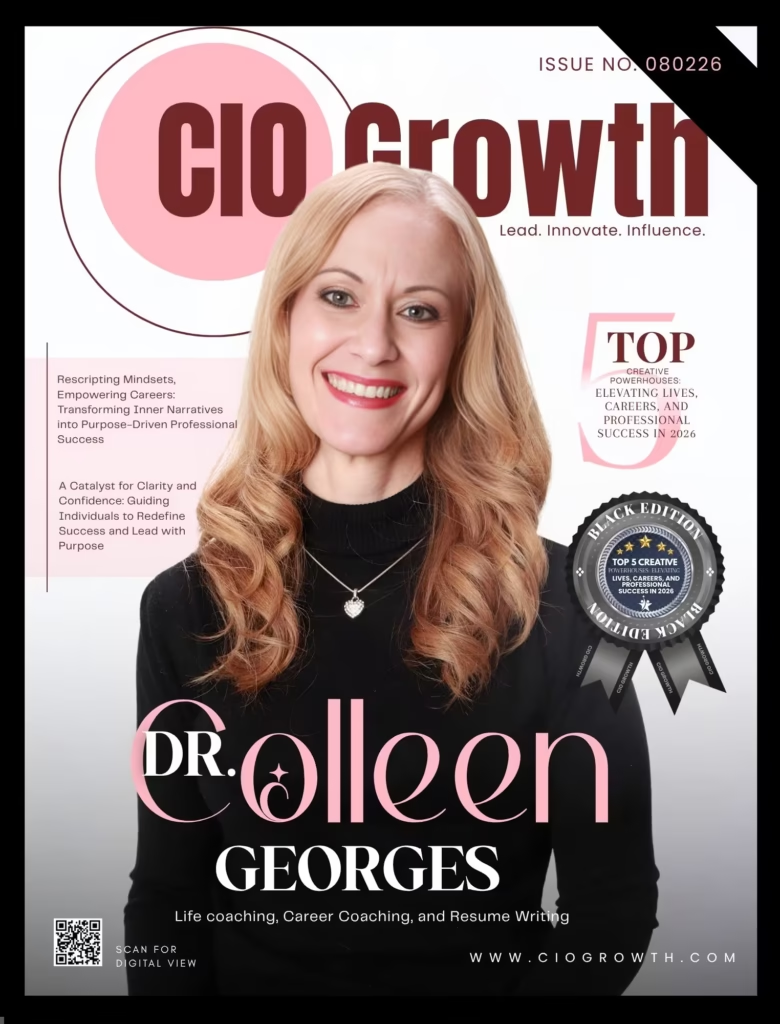
Dr. Colleen Georges Life coaching, Career Coaching, and Resume Writing Top 5 Creative Powerhouses: Elevating Lives, Careers, and Professional Success in 2026 In a professional world marked by rapid change, uncertainty, and constant reinvention, few leaders stand out for their ability to combine deep psychological insight with practical, real-world impact. Dr. Colleen Georges is one such powerhouse – an educator, counselor, TEDx speaker, author, and entrepreneur who has dedicated her career to helping individuals rewrite the narratives that shape their lives and careers. Her influence sits at the intersection of mindset, meaning, and momentum – where internal belief systems meet external action. At a time when professionals are questioning not just what they do, but why they do it, her work provides both clarity and courage. A Journey Rooted in Purpose and People Dr. Georges’ calling emerged early. At just 14, she knew her future would involve working closely with people. This clarity led her to pursue a doctorate in counseling psychology, initially with the intention of becoming a family therapist. However, a pivotal internship at Rutgers University Career Services in 1997 altered her professional trajectory in a profound way. What began as skepticism toward career counseling quickly transformed into a passion. She discovered deep fulfillment in helping students clarify their goals, articulate their strengths through resumes, navigate job searches, prepare for interviews, and ultimately align their careers with their values and passions. This realization launched a 13-year career in higher education leadership, culminating in her role as a department director, followed by more than 16 years teaching women’s leadership and counseling courses at Rutgers. These years were formative – not only in refining her expertise, but in shaping her philosophy. She witnessed firsthand how intelligence and talent alone were rarely the barriers holding people back. Instead, it was fear, self-doubt, and unexamined internal narratives that limited growth. Building a Business Around Transformation In 2008, Dr. Georges began writing resumes on the side, responding to a growing demand for personalized, thoughtful career guidance. When her son was born in 2009, her priorities sharpened further. By 2010, she made a decisive leap – leaving her director role to run her business, RESCRIPT Your Story LLC, full-time. Over the past 16 years, her firm has evolved into a trusted partner for individuals and organizations seeking meaningful growth. Through career and life coaching, resume writing, and organizational speaking and training, she has helped professionals at every stage – from early-career individuals to seasoned leaders – navigate change with confidence and intention. What distinguishes her approach is its depth. Rather than offering surface-level fixes, she works at the root – helping clients understand why they feel stuck before determining how to move forward. A Defining Milestone: Taking the TEDx Stage While earning a doctorate and building a thriving business are remarkable achievements, Dr. Georges identifies one moment as a true turning point: her 2016 TEDx Talk, “Rescripting the Stories We Tell Ourselves.” On that stage, she articulated the core framework behind her work – that the internal stories we repeat ultimately become the lives we live. By openly sharing her own experiences with anxiety and self-doubt in her twenties, she demonstrated how gratitude and intentional self-talk can reshape mindset and outcomes. The impact was immediate and lasting. The talk resonated deeply with audiences across professions and generations, leading to her book, RESCRIPT the Story You’re Telling Yourself. More importantly, it gave language to an experience many people felt but could not yet name – the quiet power of self-narrative. Yet, for Dr. Georges, success is not measured by visibility alone. The true milestones are found in client outcomes: professionals leaving toxic environments, negotiating raises they once believed were out of reach, launching purpose-driven businesses, and reclaiming confidence during moments of transition. Redefining Career Success in a Changing World As technology and AI rapidly reshape the coaching and professional development landscape, Dr. Georges sees both promise and caution. Digital tools have expanded access and efficiency, but they cannot address the emotional and psychological complexity of modern work on their own. Today’s professionals are navigating layoffs, burnout, identity shifts, and blurred boundaries between work and life. In this environment, she believes career coaching must move beyond tactics and titles. It must become holistic, psychology-informed, and human-centered. With her background as a Licensed Professional Counselor, combined with advanced training in career and life coaching, Dr. Georges brings a rare integration of science and strategy. She helps clients build resilience, manage imposter syndrome, strengthen confidence, and make decisions aligned with both ambition and well-being. Technology, in her view, is a powerful supplement – but mindset remains the foundation. Advice for Leaders and Aspiring Change-Makers Dr. Georges’ guidance to emerging leaders is refreshingly direct: Don’t wait – initiate. Too many capable professionals delay action while waiting for certainty, permission, or perfect readiness. Her message reframes confidence as a byproduct of movement, not a prerequisite. Small, intentional, courageous steps create momentum – and momentum builds belief. Equally important is her redefinition of impact. Impact, she explains, is not always loud or public. Sometimes it is mentoring one person, setting a boundary that protects your values, or choosing integrity over applause. Leadership is not performance – it is alignment. A Lasting Influence for 2026 and Beyond As one of the Top 5 Creative Powerhouses shaping professional success in 2026, Dr. Colleen Georges represents a new model of leadership – one that values self-awareness as much as strategy, and courage as much as credentials. Her work reminds us that careers are not merely built through external achievements, but through the internal stories that guide our choices. By helping individuals rescript those stories, she continues to elevate lives, careers, and confidence – proving that sustainable success begins within and expands outward, one intentional step at a time.

Dr. Colleen Georges Read More »

Charity Darnell

Charity Darnell

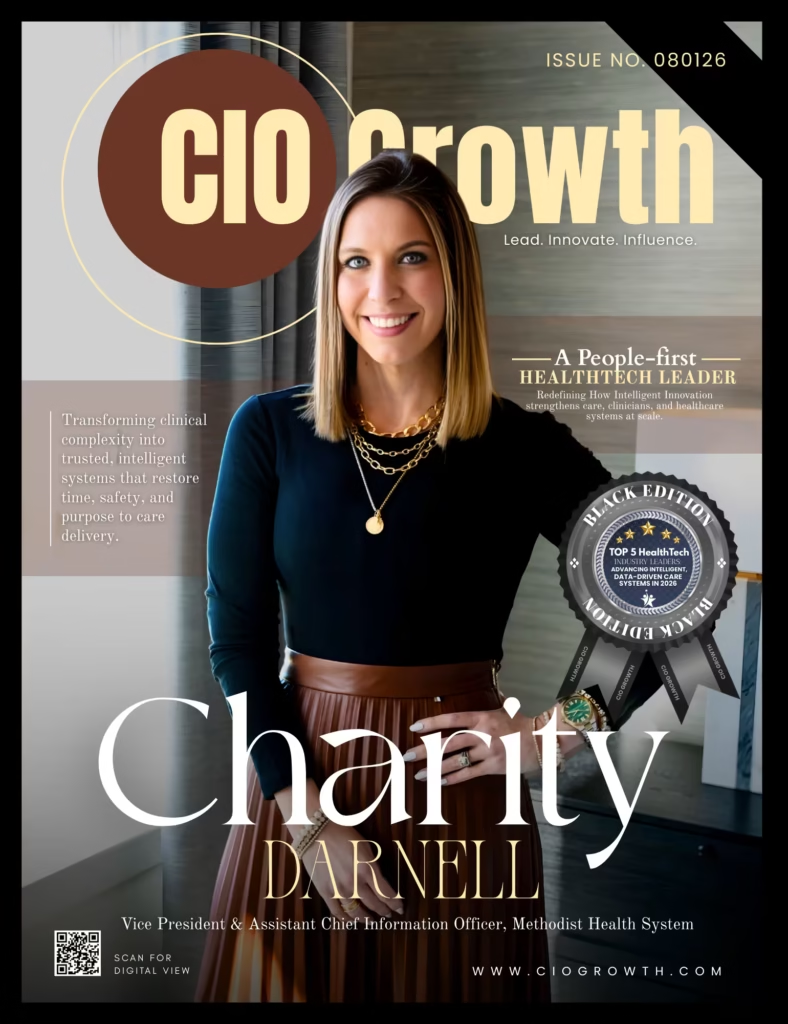
Charity Darnell Vice President & Assistant Chief Information Officer Methodist Health System Top 5 HealthTech Industry Leaders: Advancing Intelligent, Data-Driven Care Systems in 2026 In an era where healthcare transformation is defined by intelligence, interoperability, and human-centered design, Charity Darnell stands as a powerful example of what values-driven leadership can achieve. With a career that began at the bedside and evolved into enterprise-level digital leadership, Charity represents a new generation of HealthTech executives: clinicians first, technologists second, and people always at the center. Her work sits at the intersection of clinical care, informatics, and organizational transformation, where technology is not treated as the solution itself, but as an enabler of safer systems, stronger teams, and better patient outcomes. Across more than a decade of leadership in complex healthcare environments, Charity has consistently proven that the most impactful innovation is rooted in empathy, trust, and operational reality. From Bedside Care to Enterprise Transformation Charity’s professional journey began as a pediatric nurse, an experience that continues to define her leadership philosophy. Caring for children and families during their most vulnerable moments taught her that excellence in healthcare is never limited to clinical expertise alone; it is shaped by communication, teamwork, reliability, and compassion. Those early lessons became the foundation of a career built on service, accountability, and human-centered leadership. As her career evolved, Charity transitioned into clinical informatics and healthcare technology leadership, driven by a desire to solve the systemic challenges clinicians face every day. She saw firsthand how fragmented workflows, inefficient systems, and poorly designed digital tools could add burden rather than value. Instead of viewing technology as an end goal, she approached it as a means to remove friction, restore time to care teams, and strengthen safety and outcomes. Over 14 years at Cook Children’s Health Care System, Charity grew into senior leadership roles, ultimately serving as Vice President & Chief Clinical Information Officer. In this role, she helped guide enterprise digital strategy, clinical transformation, and informatics governance at scale. Most recently, she stepped into a new chapter as Vice President & Assistant Chief Information Officer at Methodist Health System, where she continues to drive innovation with a focus on resilience, workforce sustainability, and operational excellence. Across every role, her purpose has remained constant: people first – patients, clinicians, and teams. Her career reflects a rare blend of clinical credibility, technical fluency, and transformational leadership. Building Systems That Serve the Frontline When asked about her most significant professional milestone, Charity does not point to a single project or title. Instead, she speaks to impact – sustained, human-centered impact that improves daily work for clinicians and care teams while advancing safety and quality for patients. One of her most defining accomplishments has been leading large-scale digital transformation initiatives that meaningfully improved clinical workflows, strengthened governance, and reduced operational burden across complex healthcare systems. From enterprise EHR optimization to informatics redesign, her work focused not simply on deploying technology, but on aligning clinical leaders, IT teams, and operational stakeholders around shared outcomes. For Charity, informatics serves as the bridge between care and capability – translating clinical complexity into workflows that technology can support, and translating technical possibility into tools that actually work for frontline teams. This dual fluency has enabled her to deliver systems that are not only functional, but trusted and adopted. Equally important has been her commitment to culture and people development. She has built high-performing teams rooted in psychological safety, shared accountability, and professional growth. Seeing analysts evolve into confident change leaders, clinicians feel supported by digital tools, and teams thrive within resilient structures stands among her most meaningful achievements. Stepping into her current role at Methodist Health System represents both a milestone and a platform – an opportunity to extend her impact, scale innovation, and continue serving at enterprise level. For Charity, success is ultimately measured not by systems deployed, but by environments created: spaces where people feel valued, empowered, and equipped to deliver the best possible care. Leading the Shift from Digital Adoption to Digital Maturity Charity believes healthcare is entering a defining moment. Workforce strain, financial pressure, rising consumer expectations, and accelerating technological capability are converging at unprecedented speed. In this environment, transformation will not be driven by technology alone – but technology will serve as a powerful catalyst. She sees the future of healthcare shifting decisively from digital adoption to digital maturity. Organizations will move beyond simply deploying tools toward measuring outcomes that truly matter: reduced clinician burden, improved safety, operational resilience, and workforce sustainability. AI-enabled workflows, ambient documentation, predictive analytics, and intelligent capacity management will become foundational – but only if implemented responsibly, ethically, and with deep clinical partnership. For Charity, success in this next era requires strong governance, cyber resilience, interoperability, and workflow redesign – not as optional enhancements, but as operational imperatives. Technology leaders must increasingly serve as translators between what is technically possible and what is clinically practical, ensuring innovation enhances care rather than disrupting it. Her personal mission – and the mission of the organizations she serves – is to keep people at the center of innovation. This means designing systems that feel intuitive, reliable, and supportive to frontline teams. It means listening deeply to clinicians, measuring what truly improves practice, and being willing to change direction when solutions fail to serve real-world needs. She is particularly passionate about virtual nursing, ambient enablement, and automation of administrative workload – not to replace clinicians, but to restore time, energy, and joy in practice. In her vision, the future belongs to healthcare organizations that build trust, reduce friction, and prove that technology can strengthen, not strain, the human experience of care. Leadership Rooted in Service, Trust, and Purpose For aspiring leaders seeking to create meaningful impact, Charity’s message is both clear and deeply grounded: lead with people first – always. She believes strategy, execution, and results matter, but leadership is ultimately defined by stewardship – the responsibility to build environments where people care for people during life’s most difficult moments. The

Charity Darnell Read More »

Paul Feith

Paul Feith

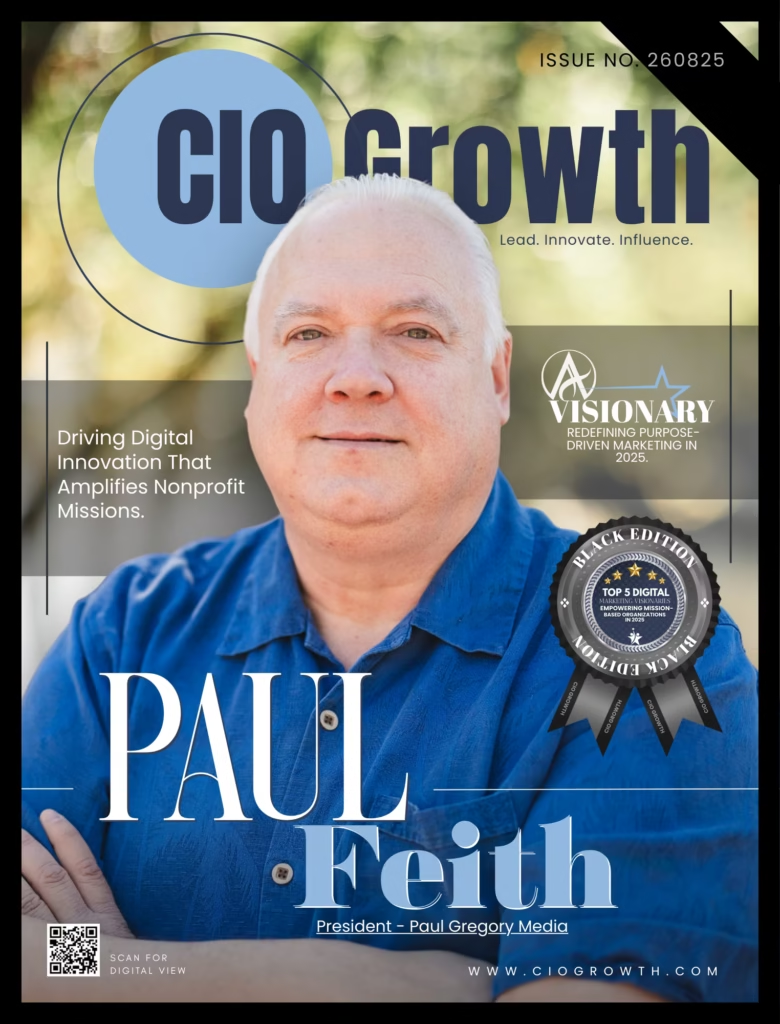
Paul Feith President Paul Gregory Media Top 5 Digital Marketing Visionaries Empowering Mission-Based Organizations in 2025 In today’s digital age, where a compelling online presence can make or break the success of mission-based organizations, visionary leaders in digital marketing are more critical than ever. Among those shaping the future is Paul Feith, an innovator, strategist, and empathetic leader whose agency, Paul Gregory Media (PGM), has become synonymous with empowering nonprofits to magnify their impact through digital excellence. This article dives deep into Paul Feith’s inspiring journey, the philosophy that drives his company, and his groundbreaking work in 2025, spotlighting why he is a leading figure among the top digital marketing visionaries for mission-driven organizations. Early Passion for Technology and Creativity Paul Feith’s story begins in the late 1990s, a period marked by the rise of the internet and digital media. In 1998, Paul started his professional career in the new media department at Playboy Enterprises, where he immersed himself in the burgeoning world of graphic design, website development, and content delivery systems. These formative years exposed him to the intersection of creativity and technology, fuelling a passion that would steer much of his later work. At a time when the digital landscape was still in its infancy, Paul embraced learning every facet of the field – from database programming to digital marketing strategies – and remained agile amid the rapidly evolving tech scene. This skill set positioned him uniquely as an early adopter of tools and trends that would become crucial pillars in digital marketing today. Entrepreneurial Beginnings and the Birth of Paul Gregory Media In 2006, armed with experience and a vision, Paul founded Paul Gregory Media in Naperville, Illinois. The company’s name pays homage to his first and middle name, Paul Gregory, symbolizing a personal stamp on the business’s ethos. Initially a one-man endeavour focused on graphic design, PGM concentrated on building a solid reputation for creativity and client commitment. During these early years, the 2007 economic recession posed significant hurdles for the company. Budgets tightened across industries, especially in marketing, and competition intensified. Rather than scaling down, Paul saw an opportunity to engage more deeply with his community. He focused on pro bono work and partnerships with local nonprofits, providing them affordable, quality marketing solutions to help them grow. This community-first approach sowed seeds for PGM’s later specialization and its embedded social mission. A Strategic Shift Toward Mission-Based Organizations By 2011, Paul’s increasing involvement with nonprofit boards such as Giving DuPage immersed him in the unique challenges mission-driven organizations face. He realized nonprofits often lacked the digital know-how and resources essential for effective fundraising, advocacy, and volunteer engagement in a digital-first world. Recognizing this gap, Paul transitioned PGM from a general marketing company to a niche full-service digital agency focused primarily on serving nonprofit clients. PGM expanded its offerings to include comprehensive digital strategies that leveraged branding, website development, content marketing, social media, paid media, user experience, and video production tailored to the distinct needs of organizations with a cause. This strategic pivot not only differentiated PGM but also aligned the agency’s business objectives with Paul’s passion for social impact. The Certified B-Corporation Commitment A landmark moment for Paul Gregory Media came in 2020, when the agency earned Certified B-Corporation status. This certification is awarded to companies meeting rigorous standards of social and environmental performance, accountability, and transparency. It solidified PGM’s position not just as a marketing agency but as a socially responsible enterprise committed to purpose alongside profit. The B-Corp certification aligns with PGM’s core values centered on business ethics, community involvement, and sustainability. It frames the company’s strategic decision-making processes and daily operations, ensuring that social impact and client success are deeply integrated with employee welfare and environmental consciousness. Cultivating an Inclusive and Supportive Culture Beyond client work, Paul Feith’s leadership philosophy is evident in the culture he cultivates internally. PGM operates as a 100% remote agency, embracing flexibility and work-life balance with a 32-hour four-day workweek and an unlimited paid time off policy. This progressive approach attracts top digital marketing talent who prioritize meaningful work alongside personal wellbeing – key to retaining a workforce driven by empathy and dedication to mission-driven causes. Paul personally recruits marketers and creatives with nonprofit experience or a gifting mindset to foster a team that truly understands the client’s perspective. The company’s leadership invests in ongoing employee development through continuous learning programs, ensuring team members stay on the cutting edge of digital marketing trends and technologies. Financially, PGM pledges 1% of its gross revenue annually in cash donations and dedicates 15% of their time to pro bono service – statistics that rose significantly during the COVID-19 crisis to meet intensifying nonprofit needs. This embedded culture of generosity is not just rhetoric; it drives higher community engagement and a stronger sense of purpose among employees, reinforcing PGM’s brand as a social enterprise. Innovative Marketing Strategies Empowering Nonprofits Under Paul’s guidance, PGM embraces a forward-thinking marketing philosophy that fuses data-driven insights with creative storytelling. One prominent innovation is the adoption of Pillar-Based Marketing, a strategy that uses AI to identify and cluster content around high-value SEO keywords. This technique accelerates online visibility and engagement for nonprofits, helping them compete effectively in saturated digital spaces. For example, a typical client will experience a 40% surge in website traffic and converted leads through these AI-powered content clusters. Such cases demonstrate how PGM uses technology not as an end but as a means to amplify mission-driven messaging. Paul also leads PGM’s exploration of emerging trends like AI strategy automation, privacy-first digital tactics (especially in anticipation of a cookieless future), strategic use of short-form videos, influencer marketing designed for social impact, and omnichannel campaigns that integrate online and offline donor experiences. His insistence on continuous A/B testing and real-time analytics fosters a culture of experimentation and agility, critical for sustained nonprofit success. Community Leadership and Board Involvement Paul’s engagement with nonprofit governance extends deeply into board memberships and philanthropic endeavours. Since 2011, he has

Paul Feith Read More »

Michael Dyrbo Birch

Michael Dyrbo Birch

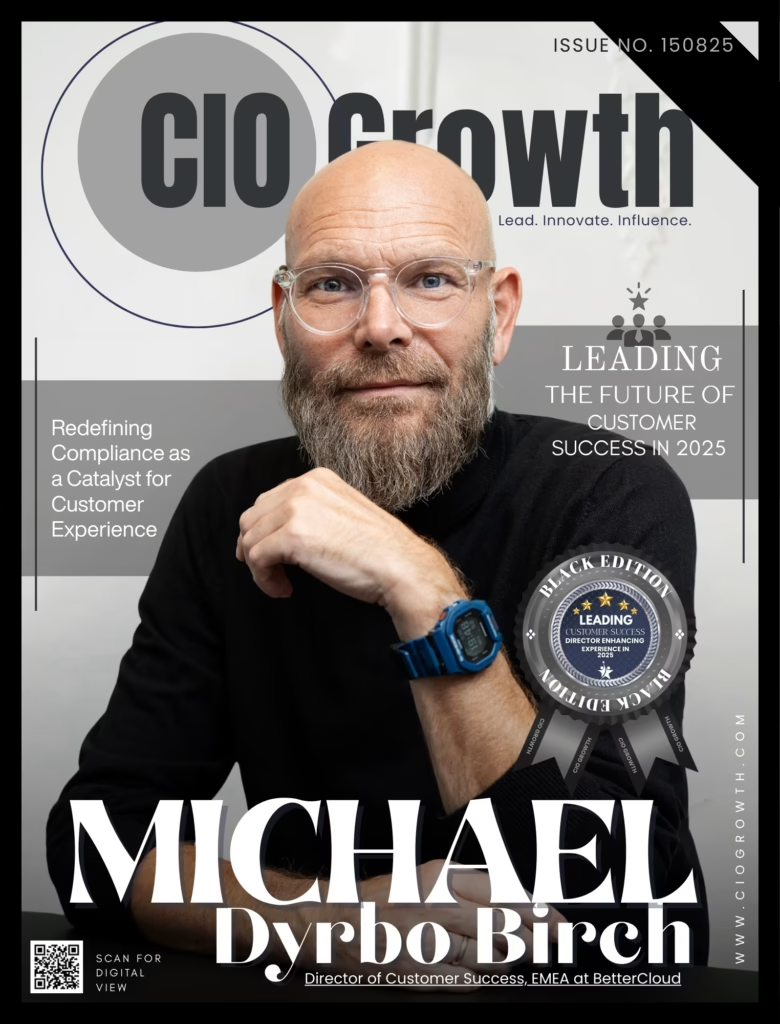
Michael Dyrbo Birch Director of Customer Success EMEA at BetterCloud Leading Customer Success Director Enhancing Experience in 2025 In the modern SaaS landscape, customer success is no longer just about solving problems after they happen – it’s about creating experiences that inspire loyalty, build trust, and deliver measurable value every single day. At the center of this evolution is Michael Dyrbo Birch, the Director of Customer Success, EMEA at BetterCloud, a leading SaaS management platform known for its ability to help organizations discover, manage, and secure their applications. Michael’s career story is one of transformation – shaped by technical expertise, sharpened by leadership roles across telecommunications, pharma, and tech, and driven by a relentless focus on customer-centric innovation. His approach is both visionary and practical: make compliance more automated, experiences more human, and teams more empowered. With over 15 years of experience leading customer success and support teams, Michael has built a track record that blends operational excellence with strategic foresight. Today, from his base in Copenhagen, he leads initiatives that not only help customers navigate the complex world of SaaS governance but also ensure they feel valued, supported, and confident in every interaction. His approach blends deep technical expertise, a passion for customer advocacy, and a vision for compliance automation that’s as much about people as it is about technology. From Mechanics to Management – The Unlikely Path to SaaS Leadership Michael’s professional journey did not begin in the world of SaaS dashboards or compliance workflows – it began with machinery, precision, and discipline. In the early 1990s, he trained as an Automatic Mechanic, honing skills that required patience, technical knowledge, and problem-solving under pressure. His time with the Royal Danish Air Force brought an added dimension – structure, teamwork, and a commitment to excellence that would become hallmarks of his leadership style. Later, at LEO Pharma, he transitioned from hands-on engineering roles to more complex operational challenges, building a foundation in systems thinking that would prove invaluable in the fast-changing tech sector. By the late 2000s, Michael had entered the telecommunications industry, taking on roles in CTI consulting and later as a Unified Communications Specialist. It was here that he first began to blend technical expertise with customer-facing responsibility, realizing that technology only achieves its full potential when customers truly understand and adopt it. Discovering the Power of Customer Success The turning point in Michael’s career came when he moved into leadership roles that put customer outcomes at the center. At TDC Erhverv, where he served as Head of Department – Cloud Support, he introduced multi-channel strategies that significantly improved customer satisfaction ratings. His belief that “customer support is not just about solving tickets – it’s about solving futures” began to shape the way he approached every project. Later, at Tricent, Michael stepped into a dual role that combined Head of Customer Success and Head of Customer Experience. This was a defining period where compliance automation and customer experience intersected in new and innovative ways. When a major client faced compliance risks due to millions of excessive file permissions, Michael’s team leveraged automation tools to flag, trace, and revoke risky access in record time. This was not just a technical win – it was a trust win. It proved that compliance, often seen as a burden, could be reframed as a service advantage when implemented intelligently. BetterCloud and the New Era of SaaS Management In February 2025, Michael joined BetterCloud as Director of Customer Success, EMEA, stepping into a role that perfectly aligned with his mission: to create exceptional customer journeys across all touchpoints while embedding compliance and governance into the heart of the experience. Here, his responsibilities span strategy, execution, and advocacy: Setting and executing customer success strategies to boost satisfaction, retention, and product adoption. Collaborating with sales, product, and marketing to align customer success initiatives with company-wide goals. Analyzing customer data and feedback to identify trends and areas for improvement. Acting as the voice of the customer in product development discussions. Optimizing processes to improve efficiency without sacrificing quality. Managing key accounts to ensure loyalty and long-term partnerships. In Michael’s words: “Compliance should be invisible when it works – customers should feel safe, not slowed down.” At BetterCloud, this philosophy translates into platforms and processes that help organizations automate security workflows, manage SaaS sprawl, and safeguard sensitive data – without interrupting productivity. Michael’s leadership is grounded in the belief that customer success is a growth driver. His team’s role is not merely reactive – it’s proactive, anticipating needs before they become issues The Compliance – Experience Balance One of Michael’s core beliefs is that compliance and customer experience are not competing priorities. The challenge is in designing systems where regulatory requirements are met seamlessly, so they support rather than disrupt the user journey. At BetterCloud, this means: Building unobtrusive workflows that meet strict governance standards without adding friction. Maintaining transparent communication so customers understand the value of each compliance step. Embedding feedback loops to continuously improve tools and services based on real-world usage. This mindset has helped transform compliance from being perceived as a “necessary evil” into a value proposition – one that strengthens trust, differentiates the brand, and reduces churn. Leadership in Action – Coaching, Mentoring, and Empowerment Michael’s leadership philosophy is grounded in one simple truth:  “I cannot do this alone, but as a team, we can do anything.” He invests heavily in mentorship and coaching, helping team members develop both technical expertise and strategic thinking. In one case, he mentored a new Customer Success Manager who had excellent communication skills but limited experience in proactive client engagement. Through structured mentoring, pairing with senior colleagues, and practical scenario training, the team member transformed into a confident strategist – boosting client satisfaction and retention in the process. For Michael, these wins are just as important as revenue growth. “When a team member grows, the whole organization grows,” he says. Measuring What Matters In the world of SaaS and compliance automation, success isn’t just about

Michael Dyrbo Birch Read More »

Gene Saunders

Gene Saunders

Gene Saunders Founder/CEO Captain, ret., Chesapeake Police Dept. Virginia. Most Influential Public Safety Leader in 2025 In a world where safety and security are becoming increasingly complex challenges, few individuals have made as significant and lasting an impact as Chief Gene Saunders. As the Founder and CEO of Project Lifesaver International, Chief Saunders has become a global beacon of leadership, innovation, and compassion in the field of public safety. With over five decades of distinguished service across military, law enforcement, and nonprofit sectors, Chief Saunders has not only transformed the landscape of search and rescue operations but has redefined the standards of care for at-risk individuals. Recognized as the “Most Influential Public Safety Leader in 2025” his journey is one marked by service, ingenuity, and unwavering commitment to saving lives. His influence isn’t measured solely by medals in a case (though there are many: three Silver Stars for Valor, a Presidential Commendation from Bill Clinton, Line of Duty Injury Medals, the Congressional Medal of Honor Foundation’s “Service Before Self” Award). It’s measured in minutes saved, lives preserved, and the profound peace of mind restored to thousands of families. It’s measured in the 5,000+ documented rescues achieved with a staggering 100% success rate by the organization he birthed: Project Lifesaver International. His story is not only about safeguarding lives but also about pioneering change, inspiring leaders, and building a legacy grounded in compassion, innovation, and service. A Distinguished Career in Law Enforcement and Military Service Chief Gene Saunders began his professional journey in 1968 with the Chesapeake Police Department after his military reserve unit transitioned into a military police unit. Over the course of 33 years, he served in almost every division within the department-Patrol, Vice, Narcotics, Detectives, and Training – culminating in his retirement as a Captain in 2001. He held command positions in all these divisions, showcasing a depth of leadership that spanned across multiple facets of law enforcement. In 1974, he co-founded and commanded the department’s Special Weapons and Tactics (SWAT) team, leading over 800 tactical operations in a 23-year tenure. His expertise in high – pressure, critical missions became foundational in shaping his leadership style. As Chief Investigator, he played a vital role in large-scale, multi-state, and international drug and organized crime investigations. During the 1996 Olympic Games in Atlanta, Georgia, he served as a Shift Commander on the Olympic Security Team for the soccer venue. In addition to his law enforcement achievements, Chief Saunders served in the National Guard and State Defense Force, rising through the ranks of Infantry, Airborne, and Ranger Units. He also contributed as a Senior Squadron (Ranger) Commander and Commandant of the Middle East Region Staff College in the U.S. Air Force Auxiliary (Civil Air Patrol). Certified in areas ranging from firearms and pursuit driving to raid planning and search and rescue, Chief Saunders became a thought leader in tactical law enforcement. His qualifications and contributions made him a respected mentor and role model across the country. The Birth of a Lifesaving Legacy In 1999, two years before retiring as Captain from the Chesapeake Police Department, Chief Saunders launched what would become his most enduring legacy: Project Lifesaver International. Witnessing firsthand the heartbreak and risk associated with wandering individuals suffering from Alzheimer’s, Autism, and other cognitive disorders, he envisioned a program that would change everything. Borrowing from wildlife radio tracking techniques, Saunders adapted the technology to create a people-centered rescue system. With Project Lifesaver, public safety agencies gained a proven method to locate and rescue at-risk individuals quickly and efficiently. His concept married cutting-edge technology with community policing, drastically reducing search times from hours or days to an average of just 30 minutes. From a small operation in Chesapeake, Virginia, the program grew exponentially. Today, Project Lifesaver serves over 1,800 public safety organizations across all 50 U.S. states, Washington D.C., Puerto Rico, nine Canadian provinces, and even one agency in Australia. With a 100% success rate and more than 5,000 documented rescues, Project Lifesaver stands as the gold standard in search and rescue operations for cognitively impaired individuals. Project Lifesaver: Innovation in Action What sets Project Lifesaver apart is its fusion of cutting-edge technology, specialized training, and compassionate service. The organization provides law enforcement, fire/rescue teams, and caregivers with wearable tracking devices for at-risk individuals. In the event of a wandering incident, trained responders use the devices’ signals to locate and recover individuals within an average of 30 minutes. This significantly reduces the risk of injury or death and relieves the emotional burden for families and caregivers. Project Lifesaver also offers training to first responders, equipping them with the knowledge to interact empathetically and effectively with individuals affected by cognitive conditions such as Autism, Alzheimer’s, and dementia. Through its innovations, Project Lifesaver has fundamentally transformed the landscape of public safety for vulnerable populations. It has become the gold standard for rescue and recovery services involving cognitive disorders. A Relentless Champion of Innovation Chief Saunders is not one to rest on past successes. Under his leadership, Project Lifesaver continues to innovate. The organization is actively integrating new technologies, expanding its suite of equipment, and exploring partnerships to enhance its offerings. From leveraging GPS and drone technology to refining community engagement strategies, Chief Saunders ensures Project Lifesaver remains on the cutting edge. As a certified FAA drone pilot since 1978 and a Master Flight Officer in helicopter operations, Saunders understands the power of aerial support in rescue missions. His hands-on experience in aviation and search and rescue enables him to guide the organization through strategic technology adoption, ensuring that each enhancement directly contributes to life-saving outcomes. His commitment to constant improvement has earned Project Lifesaver accolades such as Non-Profit of the Year, Most Admired Company of the Year, and Program of the Year. The organization is not just a service provider-it is a movement, driven by innovation, compassion, and unmatched success. Awards, Accolades, and Global Recognition Chief Saunders’ list of honors is both extensive and well-earned. Saunders’ influence is echoed in the symphony

Gene Saunders Read More »

Daniel Kwame

Daniel Kwame

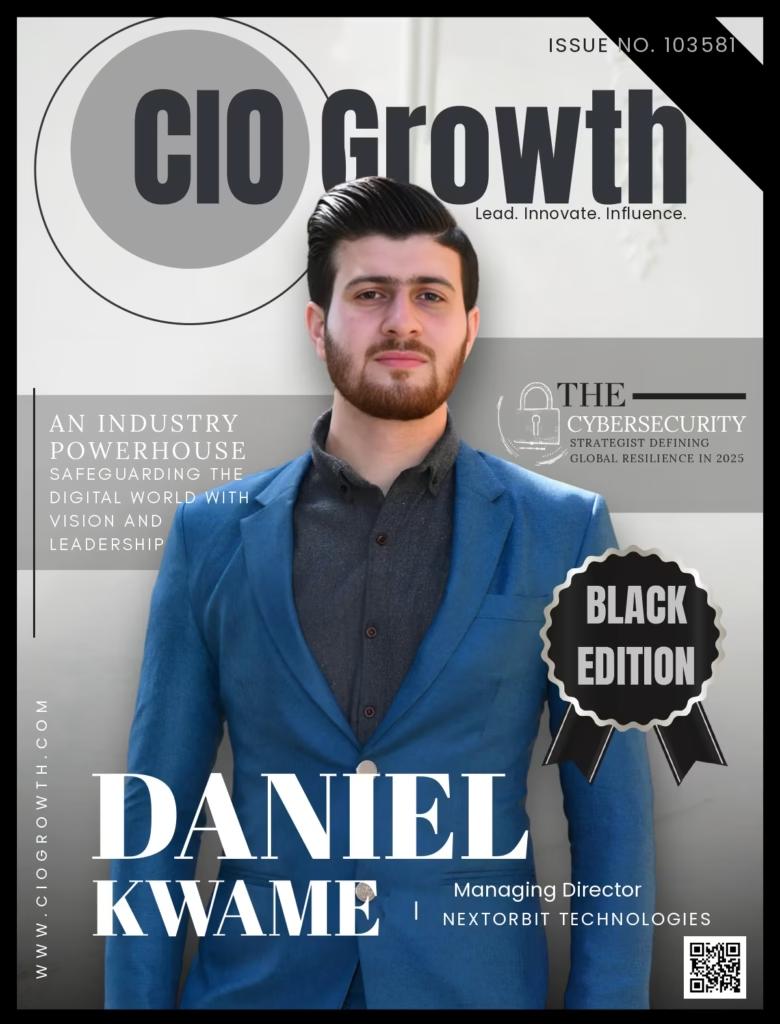
Daniel Kwame Managing Director NextOrbit Technologies The Cybersecurity Strategist defining global resilience in 2025 Property management is an essential aspect of real estate, requiring a multifaceted approach to ensure the smooth operation and profitability of properties, whether residential or commercial. It encompasses the management of properties on behalf of their owners, taking on responsibilities such as rent collection, tenant communication, coordinating maintenance, and generating financial reports. Essentially, property managers serve as intermediaries between the property owner and the tenants, ensuring that properties are maintained, fully occupied, and lucrative a seasoned expert in the real estate industry with over 25 years of experience, stands at the forefront of property management. As the owner of Hi Pacific PM, a renowned property management company, he has firmly established himself as a leader known for his dedication to providing high-quality service and his unwavering commitment to his team. Under ’s leadership, Hi Pacific PM has consistently earned accolades, including being recognized as one of the top three property management firms for the past ten years—a testament to the company’s success and growth over the years. The Symbiotic Relationship Between Property Management and Real Estate Sales In real estate, property management and sales are often interwoven, with many realtors starting in sales before dipping their toes into property management. Typically, real estate agents focus on selling properties, only venturing into property management as an additional service to supplement their primary work. However,  made a strategic and deliberate decision 15 years ago to pursue property management exclusively, diverging from the standard practice. By focusing solely on property management,  distanced himself from the typical realtor who divides attention between sales and management. His unique approach has positioned him as a specialist in his field, catering to clients who seek dedicated professionals rather than those who split their focus believes that property management is not a part-time responsibility or side project. He emphasizes that once a landlord starts renting out a property, they are bound to encounter a multitude of inquiries—from questions about rent payment systems to urgent maintenance issues. For , managing these challenges is a testament to why property management demands total commitment and focus. By dedicating himself entirely to this sector, he has been able to streamline his processes and offer a higher level of service than many competitors who juggle both sales and property management. The decision to focus solely on property management has paid off.  has built a strong reputation for being efficient and reliable, traits that have earned him the trust of both property owners and real estate agents. Realtors who need reliable property management services for their clients frequently turn to  for his expertise. This exclusivity has allowed him to create a niche for himself in the competitive real estate market, proving that specialization in one area can lead to exceptional success.   Streamlining Property Management: ’s Journey Recognizing the enormous daily demands of maintaining the properties he managed,  quickly realized the need for a more structured approach to maintenance. Within the first year of founding Hi Pacific PM,  established a dedicated maintenance department. The department was created to handle maintenance requests around the clock, seven days a week, ensuring that any property-related issues could be resolved swiftly and efficiently. As ’s portfolio of properties grew beyond 100, the need for a maintenance team became even more urgent. Tenants frequently contacted him with issues ranging from leaks to broken doors and other household problems. The constant barrage of calls began to consume ’s time as a property manager, underscoring the necessity of having a dedicated team to handle these inquiries. In response,  assigned a team to handle the influx of maintenance requests, which now average around 80 to 100 calls per week. These requests vary from routine maintenance to more complex repairs, but by having a dedicated maintenance department,  has been able to optimize his operations. The result has been a noticeable improvement in service quality, benefiting both property owners and tenants. The delegation of tasks has freed  from being consumed by maintenance issues, allowing him to focus on other crucial aspects of property management. Embracing Technological Advancements in Property Management   Over the years,  has witnessed the remarkable technological advancements that have transformed the property management industry. Innovations like automated rent collection and streamlined owner payment systems have revolutionized how property management companies operate.  recalls the days when property managers had to make frequent trips to the bank to deposit checks. Now, thanks to evolving banking procedures, those trips have become a thing of the past. The introduction of check-scanning technology has simplified financial operations, making it possible for property managers to deposit checks remotely and almost entirely eliminate cash transactions. One of the most notable technological advancements  has embraced is the use of DocuSign for contracts. This technology allows property owners and tenants to sign documents digitally, significantly speeding up the paperwork process and reducing reliance on traditional paper contracts. In addition to DocuSign,  has incorporated scanning capabilities into the company’s operations, enabling seamless sharing of documents, photos, and videos. These digital tools allow  and his team to keep detailed records of property conditions, maintenance issues, and other pertinent information. The digital images are stored on modern computers with enhanced storage capacity, ensuring easy access to records. Automated date stamping further enhances the accuracy and accountability of record-keeping, leaving little room for error. These technological innovations have not only increased efficiency but also improved the overall experience for clients and tenants.  is committed to staying ahead of the curve by continuing to adopt new technologies that simplify property management processes and improve the service experience.   A Fresh Approach to Property Management: ’s Perspective One key element that sets  apart from his competitors is his client-first philosophy. While many property management companies require owners to provide an upfront payment similar to a security deposit to cover potential damages,  took a different path. He questioned this common practice and found it unjustifiable. Many property managers rely on both the

Daniel Kwame Read More »

Laura Sanchez

Laura Sanchez

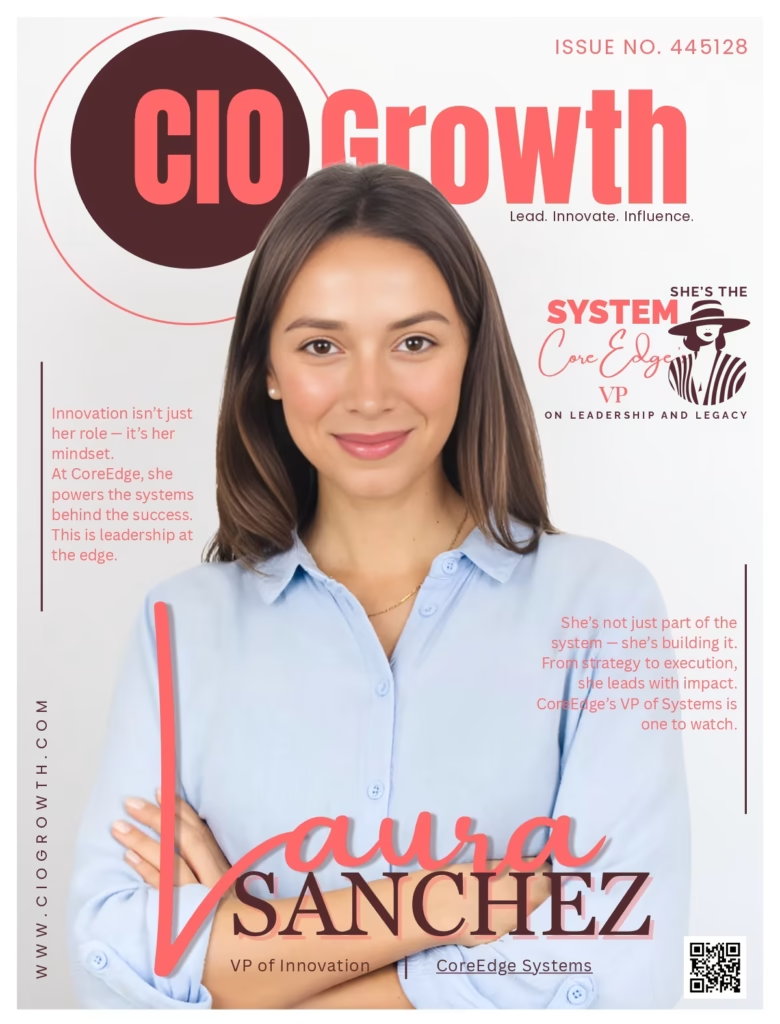
Laura Sanchez VP of Innovation CoreEdge Systems she’s the system core edge vp on leadership and legacy In the heart of New York City, where the pace of life never slows and diversity defines the rhythm of its streets,  has carved a legacy as a visionary leader who bridges the gap between human potential and organizational excellence. As Chief People Officer (CPO) at Services for the Underserved (S:US), a nonprofit dedicated to uplifting vulnerable communities, Cole’s career is a testament to the transformative power of empathetic leadership, strategic innovation, and an unyielding commitment to equity. Her journey – from economics student to global HR disruptor – reveals how redefining leadership begins with listening, adapting, and daring to put people first. Her own background – a Fordham degree in economics and psychology and a global executive MBA (NYU Stern, LSE, HEC Paris) – provides the analytical foundation for this vision. Drawing on that education and decades of experience, Cole is implementing data-driven HR programs to empower staff and advance the agency’s mission of supporting vulnerable New Yorkers. The Alchemist of Human Potential ’s story begins with a fusion of two disciplines: economics and psychology. A graduate of Fordham University, she harnessed the analytical rigor of economics and the nuanced understanding of human behavior from psychology to forge a career uniquely positioned at the intersection of business strategy and people-centric innovation. This duality became her superpower. “Organizations are successful when their people are successful” she reflects, a mantra that has guided her through roles at industry giants like Accenture, Porter Novelli, and PwC, and now at S:US, where her work impacts thousands of employees and clients alike. Her TRIUM Global Executive MBA – a joint program from NYU Stern, London School of Economics, and HEC Paris – further equipped her with a global lens, enabling her to navigate cross-cultural complexities and drive workforce transformation across borders. Whether building HR consulting practices from scratch or leading cost-reduction initiatives for Fortune 500 companies, Cole’s approach has always been rooted in a simple truth: people are not resources to manage, but partners to empower. From Consultant to Chief Cole’s path to nonprofit leadership runs through the world of corporate and consulting HR. Early in her career she held senior human-capital roles at PwC and Towers Watson and served as North America Career Management Practice Leader at Right Management. She then joined Accenture as a Managing Director (“Human Resource Disruptor”), where she led large transformation projects, and later became Chief People & Transformation Officer at Porter Novelli, leading that global firm’s talent acquisition and people development. Along the way she founded her own consulting firm ( Associates) to advise clients on HR strategy, and recently co‑founded Cascade Clarity AI, blending her people expertise with emerging technology The Architect of Inclusive Cultures Building S: US’s HR Foundation When Cole joined S:US as interim CPO in 2023, she encountered an organization brimming with passion but strained by rapid growth. Employees – many of whom had lived experiences mirroring the clients they served – were burning out under administrative burdens. “We had heroes doing lifesaving work, but our HR processes and systems weren’t designed to support them” she says. Her first act? Listening. Over three months, Cole visited programs, met with the different program leaders, and held one-on-ones with staff. “I heard stories of talent shortages, long preboarding processes, and employee burnout.. These weren’t just employees – they are advocates who care deeply about the work they are doing .” Armed with these insights, she spearheaded a three-pillar transformation: Simplifying Processes: Replacing outdated paper-based systems with cloud HR tools, cutting onboarding time by 50%. Prioritizing Wellness: Championing trauma-informed training and providing mental health resources to address secondary trauma among staff. Amplifying Voices: Encouraging employee-led committees that shape policies and processes. “HR isn’t a department; it’s a partnership” Cole emphasizes. “When we equip people with the right tools and trust, they move mountains.” Data as a Force for Good Cole introduced predictive analytics to S: US’s talent strategy. By analyzing patterns in turnover, engagement surveys, and exit interviews, her team identified a critical insight: Employees in roles with high client interaction thrived when given coaching and support. The result? The introduction of new manager training and development programs that are not one and done but designed to create internal mobility and professional development. Servant Leadership in Action Cole’s leadership style defies traditional hierarchies. A self-described “servant leader” she prioritizes presence, empathy, and collective growth over command-and-control tactics. “Early in my career, I thought leadership meant having all the answers. Now I know it’s about asking the right questions and listening” she shares. This philosophy has fostered psychological safety at S:US, where employees are encouraged to voice ideas and challenge norms. Her approach to balancing work and life further underscores her authenticity. Rejecting the myth of the “50/50 split” Cole advocates for fluidity: “There are seasons for family and seasons for work. What matters is having a support system – and grace for yourself.” With her children now grown, she channels her energy into mentoring rising HR leaders, many of whom now helm their own teams, a point of pride she calls “the ripple effect of lifting others.” By modeling the balance, she encourages her team to bring their whole selves to work, believing that a happy staff fuels a thriving organization. In her philosophy, leadership means progress and humility. She warns teams not to “let perfection get in the way of progress” and to be ready to “try, fail fast, and redirect”. Cole reminds colleagues that everyone makes mistakes: “Don’t be afraid to make mistakes…treat mistakes as a learning opportunity” she advises. Early in her career she ran teams with a “command and control” style, but she gradually learned that true strength comes from listening. “Over time I discovered that listening was key” Cole reflects. Today she combines strategic rigor with compassion – as she puts it, “having data-driven, empathetic decisions is the signature of a world-class HR professional”. Under her

Laura Sanchez Read More »